
- Daily & Weekly newsletters
- Buy & download The Bulletin
- Comment on our articles
Related articles
Recent


Popular



Brussels sets out future plan for shared bikes, with room for up to 24,000
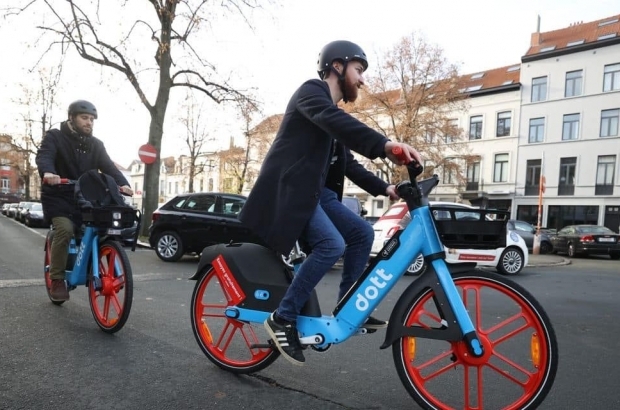
Shared bikes look set to stay on the streets of Brussels, after the regional parliament's mobility committee approved a new legal framework for shared mobility.
The text sets out the rules for shared bikes and mopeds until new licences come into force in 2028. It still has to pass a plenary vote, which is planned for 20 November.
Brussels has had no proper legal basis for shared vehicles since the end of July, when the Council of State annulled all existing permits for shared bikes and e-scooters.
The case was brought by operator Lime, which had challenged the licences awarded to its competitors Bolt and Dott.
Over the past few years, several operators have taken the region's shared mobility rules to court, often successfully.
The proposal was tabled in June by Groen group leader Stijn Bex together with the other majority parties.
It lays down who can take part in tenders, what operators have to pay and what fines apply. Every candidate will be assessed in the same way, RTBF reported.
Until 1 May 2028, any operator that meets the conditions will be allowed to put up to 2,500 shared bikes on the streets of Brussels. The cap is meant to stop the mandatory drop-off zones from becoming overcrowded.
From 2 May 2028, the region will issue two or three licences, each covering between 4,000 and 8,000 bikes. That means a total of up to 24,000 shared bikes.
"That is indeed a wide range, with at least 8,000 and at most 24,000 bikes," Bex told Bruzz. "For us, the main thing is that supply is big enough to make up for the end of the e-scooters."
The government had already decided that shared e-scooters will disappear from the streets on 1 January 2027.
Bex pointed to safety concerns. "Shared e-scooters are less stable and less safe than bikes, and so they cause more serious accidents," he said. He also said they had become a popular means of transport in the drugs trade.
He acknowledged that the ban will leave some users looking for an alternative, such as women who use them to get home safely at night, and said he hopes to win them over to shared bikes.
Shared mopeds will stay. The framework provides for one or two licences, with between 250 and 2,000 mopeds each. Pilot projects for new types of small vehicles, such as small carts or three-wheelers, will be limited to 250 vehicles per project.
The text also looks ahead to the future of Villo, the public bike-sharing scheme run by billboard advertising firm JCDecaux. Its concession ran out in September this year and was extended by two years, so a successor has to be in place by September 2028 at the latest.
The proposal stresses the need to keep a public option at lower prices for users. "That has to make affordable daily use possible at a fair price," said Bex.
The opposition is not convinced the new rules will stand up. Gilles Verstraeten (N-VA) and Alain Maron (Ecolo) question whether the text is legally watertight, particularly when combined with the plans for Villo's successor, and fear it leaves too much room for interpretation. Verstraeten called it "shoddy legal work".