

- Daily & Weekly newsletters
- Buy & download The Bulletin
- Comment on our articles
Related articles
Recent


Popular




New car tax for road maintenance will cost up to €125 per year
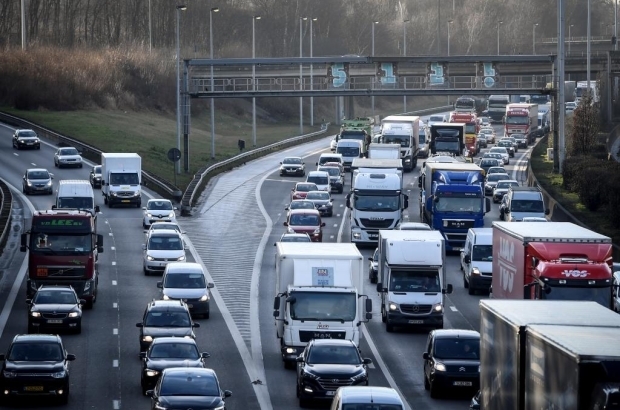
Belgian and foreign drivers will have to pay for a pass to use the country’s motorways and regional roads from 1 May 2027.
The vignette applies to vehicles weighing less than 3.5 tonnes with a few exceptions, and different options will be available, from one day to one month, two months or a full year.
Prices will also vary depending on the vehicle’s emissions level. An electric car will cost €90 for one year, a Euro 4-standard car will cost €100 and a car manufactured before 2005 will cost €125.
The pass will be digital only, linked to the vehicle’s registration number, and will have to be purchased via an online platform or at petrol stations.
Exemptions include motorbikes, lorries - which are already subject to a kilometre-based charge - tractors, coaches and emergency, defence and police vehicles.
Enforcement will be carried out using cameras and mobile patrols, with offences resulting in fines starting at €70 for the first instance and then increasing progressively for each subsequent offence, reaching €210 from the third offence onwards.
The stated aim of the new tax, which was agreed upon by Belgium’s regions, is to “ensure that every road user contributes fairly to the maintenance of the regional road network”.
According to initial calculations by the regional governments, the vignette is expected to generate €130 million in Flanders and €327 million in Wallonia, although this is an estimate as authorities do not have precise data on the number of foreign-registered vehicles using the regional road network.
The regional governments said that the measure will be "neutral" for Belgian motorists due to adjustments to vehicle taxation. While Flanders has already outlined its mechanism, the details still need to be finalised in Wallonia.
Several organisations have reacted positively to the tax, with the Federation of Belgian Enterprises (FEB), Voka and Unizo welcoming the fact that foreign motorists will soon also contribute to the funding of road infrastructure, as well as the introduction of a single system for Belgium's three regions.
However, they added that the vignette is a flat-rate charge rather than a smart kilometre-based charging system, which they believe would be more effective in tackling traffic congestion.
Mobility organisation Touring also supports the idea but questioned the assertion that it was "neutral" for Belgian taxpayers.
“I don’t believe that, from a budgetary perspective, this neutrality is possible,” said Joost Kaesemans, head of public affairs at Touring.
Kaesemans pointed out that some electric vehicle owners currently pay less road tax than the announced price of the future vignette.
Less enthusiastic was Brussels finance minister Dirk De Smedt (Anders), who criticised the “premature communication” from the Flemish and Walloon regions.
De Smedt said the Brussels region supported the agreement on the new tax, but that it was announced “in haste” and the Brussels government has committed to not introduce the tax during the current legislative term.
The Brussels region was absent from last week’s presentation of the agreement.





Comments
Will this be in addition to the current annual regional road tax paid by Belgian car owners?