
- Daily & Weekly newsletters
- Buy & download The Bulletin
- Comment on our articles
Related articles
Recent


Popular




Brussels considers regulations for privately-owned scooters
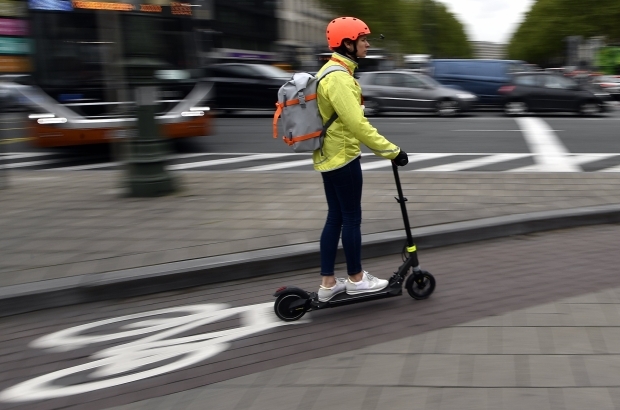
Following a ban on shared e-scooters in the Belgian capital that comes into force on 1 January 2027, authorities are turning their attention to privately-owned ones.
Sales of private e-scooters are rising visibly following the news of the ban.
This was also the case in Paris. There, after a similar ban in 2023, the number of e-scooter accidents rose by 33% in 2025 to more than 1,000 accidents.
According to Brussels mobility minister Elke Van den Brandt (Groen), the federal government should introduce stricter regulations governing the use of privately owned e-scooters in public spaces, and mobility expert Dirk Lauwers is calling for a total ban.
Lauwers’ arguments are rooted in public safety, citing figures from Antwerp police over the past three years that show that for every accident involving a shared scooter, there are five accidents involving private e-scooters.
While Van den Brandt acknowledged the safety issue, she said regulating private e-scooters is a matter for the federal government, not the region.
“We need to be much stricter with these private shared e-scooters,” said Van den Brandt.
“People often use them, but we also see that the risk of an accident resulting in serious injury is 10 times higher with an e-scooter than with a bicycle.”
Scooters are also being used in drug trafficking, which was one of the reasons cited in the ban on shared ones.
Brussels minister-president Boris Dilliès (MR) previously proposed making it compulsory for e-scooters to display number plates, which Van den Brandt supports.
“We must treat the remaining e-scooters under the highway code as mopeds,” Van den Brandt argued.
“That means you’re required to wear a helmet and must also have a number plate. This is a request from the Brussels police. When the people who fight crime on a daily basis ask us for action, we must listen.
"It would be a good idea to focus on this, but this, too, falls within the remit of the federal government."
Mobility organisation Touring said that while it understood the concerns around privately owned e-scooters, a general ban would be disproportionate.
“The problem lies mainly with non-compliant, modified or excessively fast vehicles,” the organisation said.
“These need to be subject to stricter checks, and sellers and importers who place such vehicles on the market must also take responsibility.”
Touring’s stance is that it is “more logical to enforce the existing rules more effectively” and remove dangerous vehicles from the roads than to “ban an entire mode of transport”.