
- Daily & Weekly newsletters
- Buy & download The Bulletin
- Comment on our articles
Related articles
Recent



Popular



Relatively calm New Year's Eve in Brussels with fewer arrests and injuries

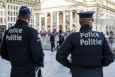
New Year’s Eve in Brussels was relatively calm this year, with 684 police interventions and 72 administrative arrests, half the number compared to the previous year.
Police described the evening as "busy but manageable", though they regretted that three officers and a paramedic were injured.
A total of 60,000 people came to watch the fireworks at Heysel and another 30,000 celebrated the holiday at the FCKNYE festival at Brussels Expo.
“Despite the large turnout at various party locations, the situation remained under control thanks to a large-scale multidisciplinary effort,” reports said, though the large crowds did cause some slight chaos when the events ended and the tens of thousands of attendees had to simultaneously seek exits and find public transport.
Despite the overall calmer celebrations, several serious incidents did take place, including the throwing of Molotov cocktails and other pyrotechnic material, and authorities confiscated a considerable amount of fireworks.
Police and emergency services, as well as employees of Stib and Securail, were targeted several times by fireworks during their interventions. One tram, two buses and various public property, such as benches and rubbish bins, were also damaged.
The police and fire brigade also had to intervene repeatedly in cases of arson. Several vehicles were lit on fire and there were numerous smaller outdoor fires.
The fire brigade alone carried out a total of around 200 interventions, including about 25 car fires. While several fire brigade vehicles were also shot at with fireworks, no one was injured.
This year’s lower arrest figures continue a downward trend. Last year police made 159 arrests, 142 of which were administrative and 17 judicial. The year before, there were 206 arrests, 170 of which were administrative and 36 judicial.
Last year, four members of the emergency and police services were also slightly injured.
The fire brigade was called out 158 times last year, fewer than this year. The number of car fires was roughly the same.
Last year, Stib counted 15 vandalised trams and buses, resulting in one passenger sustaining minor injuries. This year “only” three vehicles were damaged, with no casualties.
The burns centre at the Military Hospital in Neder-Over-Heembeek also noted a "significant decrease" in the number of fireworks victims, most of whom were minors.
“Two years ago, we still had dozens of reports,” said head of service Thomas Rose. “Since the [fireworks] ban, that number has decreased significantly.”
Of the 72 people arrested, 60 face prosecution and almost half of those (29) are minors.
“The adult suspects of the most serious offences have already been brought before an investigating judge,” the public prosecutor’s office said.
“The others have been summoned to appear in summary proceedings before the criminal court. The suspects of the least serious offences were given an amicable settlement.”
The majority of minors suspected of the most serious offences on New Year's Eve have been brought before the juvenile court.
“The court placed a number of them in a youth institution,” the public prosecutor’s office said.
“Others were released on bail by the juvenile court judge. Those who did not have to appear before the juvenile court judge received a warning from a magistrate of the public prosecutor’s office, in the presence of their parents.”
Authorities in Brussels had pre-emptively taken a number of new measures intended to reduce mischief during the holiday celebrations, including curfews for certain individuals known to police, as is done in Antwerp.
One of the biggest winners over the holiday was the tourist sector. Brussels hotels in the city centre were fully booked for New Year’s Eve.
“December is a good month anyway, but 31 December and 1 January are the most popular,” said Miriam Bouchal, PR manager at the five-star Hotel Amigo, next to the Grand-Place.
“The first half of December is mainly driven by business customers. The second half is mainly tourists with families and couples who are attracted by events such as Plaisirs d'Hiver.”
The Meininger Hotel on the canal also had no vacancies for any of its 125 rooms on New Year's Eve and Hotel Juliana was likewise fully booked, with the exception of one suite.
"What’s remarkable is that there were a lot of last-minute bookings,” commercial director Filip De Ryck told Bruzz.
“The first bookings only came in at the beginning of December. This is something I've also heard from colleagues at other hotels.”
While hotels in the city centre benefit from events such as Plaisirs d'Hiver, those further away from the hustle and bustle see somewhat lower occupancy on New Year’s Eve, especially at hotels that cater more to business travellers, such as the Steigenberger Wiltcher’s hotel on Avenue Louise.
“Our hotel occupancy is rather moderate,” said director Norman Mark, “but the restaurant is very busy”.
The high occupancy rates do come to an abrupt end. After 2 January comes what hoteliers refer to as "le temps mort", or the dead period. Last year, occupancy fell from 65% to 45% until the conference calendar started up in March.