
- Daily & Weekly newsletters
- Buy & download The Bulletin
- Comment on our articles
Related articles
Recent



Popular


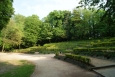

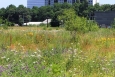
'Rewilding' Brussels: More deer spotted in Anderlecht

Anderlecht’s Neerpede and Meylemeersch areas are being increasingly visited by roe deer, demonstrating that parts of the Brussels region are becoming wilder, which local nature groups say shows the importance of avoiding large-scale construction projects.
The first sightings of deer date back to 2022, but recently animals have been seen more often, even during the day and often in pairs, Bruzz reports.
This is clear from messages on Flanders’ nature websites Natuurpunt.be and Waarneming.nl, a global biodiversity platform for citizen science and monitoring, established in 2004.
“This proves the high value for nature of the Meylemeersch,” said Bernadette Stallaert, director at local nature committee CCN Vogelzang.
She notes that the Meylemeersch area is particularly attractive for the animals: “As there are few visitors and because the nature reserve is not managed intensively, the grass can grow very high, ideal for hiding.”
She added that the deer also help preserve nature, for example by eating blackberries, “a plant that often displaces other species in nitrogen-rich soil”.
In addition, deer are also increasingly spotted in the Neerpede, she said, but as this part of Anderlecht is more urban, with houses between the two areas, the animals are unlikely to go from one to the other. Most likely, the deer come from neighbouring Sint-Pieters-Leeuw in Flanders.
Indeed, figures on roe deer hunting from the Flanders’ independent Research Institute for Nature and Forest (INBO), show the presence of these animals in this town. In the last decade, between two and eight specimens were shot there each year.
Stéphane Vanwijnsberghe, director of Brussels Environment’s forest and nature department, said this could mean that hunting in Flanders is causing the deer to flee to Brussels. But he would like to see more research to back up this theory, noting that the phenomenon of roe deer in Anderlecht is “still very recent”.
For example, in Molenbeek, which includes the Laerbeek forest and Poelbos valley, deer were already spotted in 2002. But it took 13 years “before the population felt completely at home”, Vanwijnsberghe said.
Currently between five and 10 deer live in Molenbeek, mainly in the Poelbos. This area is partially fenced off, meaning that the animals are less disturbed by visitors.
Vanwijnsberghe argues that the arrival of deer in a second area on the outskirts of Brussels shows that the city is “rewilding” – the phenomenon where conservation and restoration policies aim to reinstate natural processes and sometimes "missing" species into landscapes managed and/or degraded by humans.
“Now it is a matter of further stimulating this process, including getting better connections with Flanders, following the example of the tunnel under the Brussels ring road between Zellik and Jette that helped the Molenbeek valley deer.”