
- Daily & Weekly newsletters
- Buy & download The Bulletin
- Comment on our articles
Related articles
Recent





Popular




Population of some Brussels birds on the decline
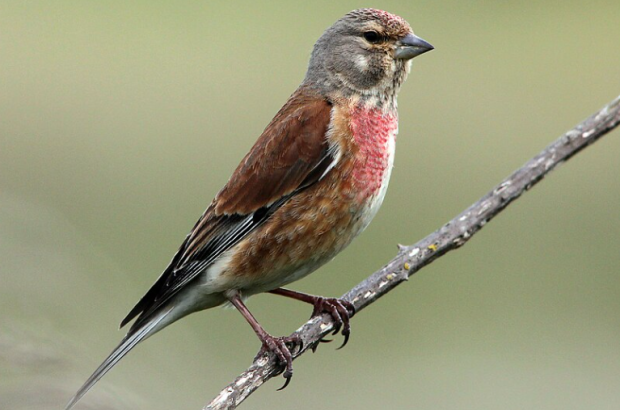
Typical Brussels birds such as the linnet and the warbler are disappearing from the region, according to Belgium’s new Breeding Bird Atlas published by nature organisations Natagora and Natuurpunt as well as Brussels Environment.
On the other hand, there are more water-bound birds and exotic species coming to the city.
The atlas provides an accurate and an up-to-date picture of breeding birds in Brussels. The inventory, based on more than 60,000 observations and the work of almost 100 volunteer ornithologists, shows that both positive and negative trends are redrawing the Brussels bird community.
With its 102 species, the total species diversity in Brussels remains relatively stable, but, according to the researchers, this hides an important reality: Brussels is losing the species that depend on space, while species that benefit from targeted management are improving.
Species that rely on fallow land have declined sharply or even disappeared. “Some species depend on those open, rugged habitats, but we rarely leave them empty for a long time in a city,” Natagora ornithologist Marius Pailhès said.
Typical birds such as the linnet, warbler and meadow pipit have now all but disappeared from the capital. Other species, such as the tree pipit and the willow tit, were sporadically identified as breeding birds in the previous atlas released 20 years ago but are now no longer found in the region.
Notwithstanding, Pailhès said not to jump to conclusions: “It remains a hypothesis to link the decline of ‘friche’ (wild land) species directly to the disappearance of friches. Those species are declining, yes. And those habitats are becoming rarer, that’s true. But causes are multiple and not always easy to detect.”
On the positive side, species that depend on humid environments such as reed beds and ponds are faring better than they did 20 years ago.
The atlas attributes this finding to Brussels Environment’s targeted measures, including the restoration of natural banks, better water quality and the partial opening of the Senne river.
“For some species, a clear link can be made with the way ponds and water features have been managed over the past 30 years,” Pailhès added.
"In the past, these bodies of water were much more sterile and managed in a way that was far less conducive to biodiversity. Good management in these areas is now clearly having a positive effect."
Brussels’ forest birds are also doing well. In the Sonian Forest, all five woodpecker species numbers are increasing or stabilising, as are birds of prey such as the buzzard, the goshawk and the honey buzzard. The environment of old trees and dead wood seem to play an important role here.
More exotic birds are also present in Brussels. The city has six breeding exotic species - three types of parakeets and three water birds. Researchers say this growth is due to the absence of natural enemies and to the availability of suitable nesting sites in the city.
Although many trends are structurally determined by spatial choices, Pailhès also sees a role for the people of Brussels.
“Ecology starts in your own garden,” he added. “Nesting boxes, façade greenery, fewer tiles, no pesticides - all this really works.”
Giving the example of the housemartin, he said: “That species had a hard time, but associations and residents took action by for example installing nesting boxes. That really works.”
Belgium’s Breeding Bird Atlas contributes to the European Breeding Bird Atlas (EBBA).
The first atlas, published by the European Bird Census Council (EBCC) in 1997, was a milestone in European ornithology. European landscapes and climate, however, have seen marked changes since the 1980s, when most EBBA1 data were collected.
The EBCC launched a new atlas project in 2010, to provide up-to-date information on the distribution and abundance of birds in Europe and documenting changes since EBBA1.
This project was carried out by the EBCC network of partner organisations located in 48 countries, including Belgium and all of eastern Europe.
Some 120,000 fieldworkers contributed data to the atlas, making EBBA2 one of the biggest ever citizen science projects on biodiversity. In total, 596 breeding species were recorded, including 539 native and 57 non-native species.
Photo: Joe Pell/Wikimedia. Licensed under Creative Commons