

- Daily & Weekly newsletters
- Buy & download The Bulletin
- Comment on our articles
Related articles
Recent




Popular

Half of Brussels traffic camera pictures are unusable
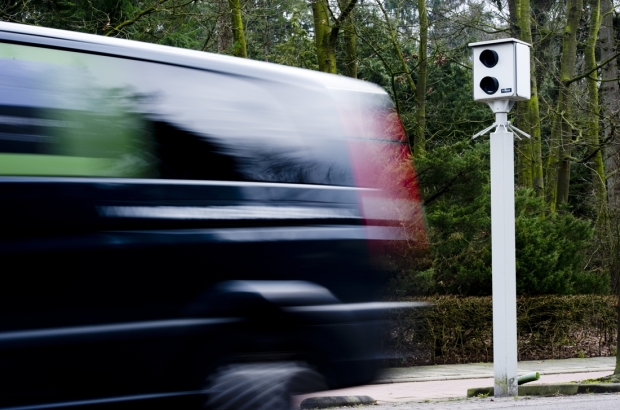
Almost a quarter of the automatic number-plate recognition cameras in Brussels are faulty and half of all images are unusable, according to the latest report from IT company Irisnet, a public-private partnership between the region and the telecoms firm Orange.
Irisnet is responsible for 498 ANPR cameras throughout the Belgian capital, which, among other things, are used to enforce the Low Emissions Zone (LEZ) and detect traffic offences.
The group recently presented its annual results to the Brussels administration and local police zones, noting that both the management and repair of these cameras remains problematic.
There are currently more than 100 faulty cameras currently in use across the region, or 23% of the total - an increase from 20% in the previous year.
Finance minister Dirk De Smedt already acknowledged last spring that between a quarter and 40% of the ANPR cameras for the Low Emissions Zone weren’t working.
While De Smedt was unable to specify how much in LEZ fines Brussels is losing out on due to the faulty cameras or unusable photographs, he promised to get on with the repairs.
“We’ve drawn up a list of the cameras that need to be replaced, repaired or serviced,” he said at the time.
“With 284 working cameras, we have sufficient coverage to record offences. Rest assured: you cannot escape the LEZ.”
But repairing faulty cameras is taking a long time. Fewer than half of the cameras that were declared faulty last year have now been repaired, or 22 out of a total of 50. Irisnet attributes the delay to, among other things "lengthy procedures".
In regards to the cameras that are functioning, barely half (48%) of the 13,700 photographs taken annually by them are subsequently used for further judicial investigation or to issue a fine, and it is unclear how many of those photographs actually result in a LEZ fine.
Brussels public prosecutor Julien Moinil, who considers the cameras an essential tool in the judicial fight against drug-related violence, has now summoned Irisnet’s senior management for consultations later in September.
In addition to the ANPR cameras, there are dozens of companies in Brussels that manage all manner of surveillance cameras for the region's roads.
There are about 6,000 cameras in total, a number of which are owned and managed by the Brussels authorities themselves, although it is not always clear who is responsible for various operating costs.
There is also the issue of a batch of 320 ANPR cameras that were purchased to roll out the planned Smartmove road-charging system, but were never used after the idea was shelved during the previous parliamentary term.
These, along with 260 cameras purchased in 2018 to monitor the LEZ but which are now obsolete, make up a total 580 unused cameras currently in storage.
In a memo dated 16 July, De Smedt stated that he wished to either sell these cameras or deploy them as a strategic reserve, and that Irisnet must remain the designated and sole operator of the ANPR camera network.
“We’re now looking specifically at which cameras are still usable and whether they can be deployed, serve as a strategic reserve or are better off being sold to finance suitable equipment,” Eva Vanhengel, spokesperson for minister De Smedt, confirmed to Bruzz.
Vanhengel described the current management of the ANPR cameras as too fragmented and unsustainable.
“The problem is clear: Brussels has too many different bodies in charge, too many contracts and too many points of contact for a single camera network,” Vanhengel said.
“This leads to delays, extra costs and a lack of accountability. We’re now tackling this fragmentation. We want to move towards a single, clear governance structure, a single operational manager and clear agreements on performance and funding.”
Brussels minister-president Boris Dilliès (MR) agreed, saying that “work needs to be carried out on the camera system in the Brussels region in order to simplify its management”.





Comments
That "Brussels has too many different bodies in charge, too many contracts and too many points of contact" is a root cause of countless problems and shortcomings of the Region.