
- Daily & Weekly newsletters
- Buy & download The Bulletin
- Comment on our articles
Related articles
Recent



Popular



Brussels mayors plan legal action against police zone merger
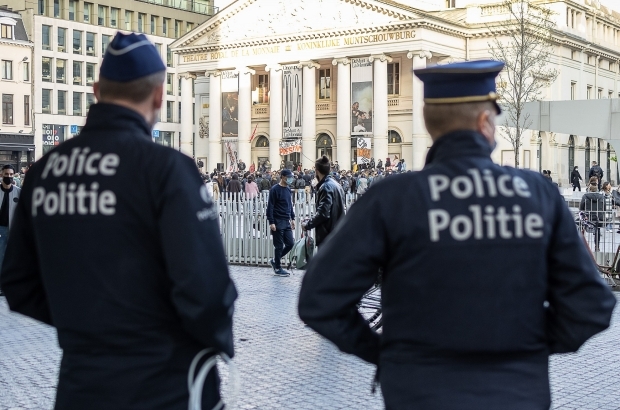
At least four Brussels mayors are taking their case against the merger of the capital’s six police zones to the Constitutional Court.
The merger - which was approved by the Brussels parliament last week - means just one chief of police for the whole Brussels region, which supporters say has the advantage of a unified command structure.
But many of the mayors in Brussels - including those of Berchem-Sainte-Agathe, Ganshoren, Woluwe-Saint-Lambert and Forest, who are behind the appeal - strongly oppose the merger, saying it would dilute their voices.
“The merger is problematic,” said Christian Lamouline (Les Engagés), mayor of Berchem-Sainte-Agathe.
“My vote in that merged police zone will only carry 1.4% weight in decisions. How can I then guarantee a police force that’s close to my local residents?
"If the four largest municipalities reach an agreement among themselves, the smaller ones risk having to follow their decisions every time."
According to Lamouline, the mayors could have a case because the Brussels police zones are required to merge, whereas other, much smaller Belgian zones are not.
“My mission as mayor is to defend the people of Berchem and their safety,” said Lamouline.
“Not a single one of our amendments to this law - for example, to give every mayor a single vote - was adopted. Now we have no choice but to take legal action.”
Lamouline’s party, however, supports the merger.
“This is a legal matter, not a political one,” said Les Engagés spokesperson Marine Lambrecht.
“We take local concerns into account, but whether people like it or not, the merger of the police zones is laid down in the coalition agreement and will go ahead.”
In other municipalities, the appeal procedure is still under consideration. The mayors of Koekelberg, Auderghem, Woluwe-Saint-Pierre and Evere also wish to take the matter to the Constitutional Court, but have yet to reach an agreement on this within the municipal executive, as the others have already done.
Currently, there are six police zones spread across the capital’s 19 municipalities.
The merging of zones Brussels Capital/Ixelles, Brussels West, Brussels South, Uccle/Watermael-Boitsfort/Auderghem, Montgomery and Brussels North is a federal initiative expected to be fully realised by 1 January 2028, according to interior minister Bernard Quintin (MR).
The combining of six communication units, dog units and criminal investigation departments in each zone is expected to lead to economies of scale that would also allow police officers to be redeployed as the situation demands.
The federal government has earmarked €65 million to support the merger, which it said was needed because resources are currently too scattered.
The primary security issue in Brussels is organised crime, which proponents of the merger say do not stop at the boundaries of police zones. The stated aim is to centralise resources for more effective interventions.
But mayors worry that these resources will be concentrated in the "crime hotspots", such as the city centre or the Brussels Midi district, though federal authorities insist police officers will be evenly distributed across the whole territory, without penalising the smaller municipalities.
The merger also aims to strengthen the police presence on the ground. The proposal stipulates a mandatory minimum of one neighbourhood inspector per 2,000 inhabitants in each area.
Some mayors also fear that the merger will prove costly, with local security budgets likely to be increased.
The merger does include means for a mayor to block a decision that would harm the general interest of their municipality.
The proposal also creates a framework for the voluntary merger of police zones in the rest of the country. While there is no obligation to do so, a financial incentive of several million euros is provided by the federal government.
Municipalities and police zones outside the capital that wish to merge could do so from 2028, with the same objectives as in Brussels: to achieve economies of scale by strengthening the police presence on the ground.