- Daily & Weekly newsletters
- Buy & download The Bulletin
- Comment on our articles
Related articles
Recent


Popular

Antwerp’s contemporary art museum unveils 2026 programme following political U-turn over its future
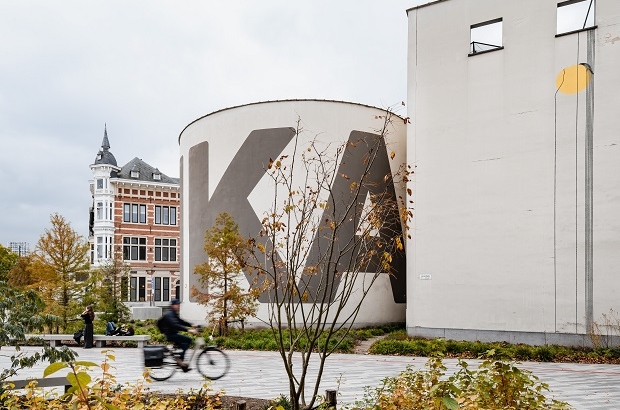
Belgium’s oldest contemporary art museum M HKA has announced its 2026 programme following months of controversy over its status and collections.
The Antwerp museum, a Flemish Community cultural institution since 1987, provides a place for contemporary artists to showcase their work within an international context. But new plans threatened to strip its museum status and move its collection to Ghent museum Smak.
From expansion plans to institutional downgrading
It was on 3 October 2025 that Flemish minister of culture Caroline Gennez presented a proposal terminating the new-build project for M HKA and moving its entire collection of more than 8,000 works to S.M.A.K. in Ghent as part of a cost-reduction strategy.
Ultimately, this would have removed the institution’s museum status, downgrading it to an arts centre for temporary programming. All of this happened without any consultation with the museum, its stakeholders, museum professionals or artists, decried the Antwerp museum.
Given its artist-centred focus and close ties to the Flemish Community, the proposal was also met with disbelief and incomprehension within the art world. Many voiced concerns about Antwerp’s cultural standing in the international art landscape and the potential impact on visitor numbers, the city’s attractiveness and its overall cultural portfolio.

Critics also lamented art being reduced to a material and monetary asset. As Annick Schramme, professor of cultural management, stated: “Collections in cities are often historically developed; they are not commodities.”
Protests and petitions in support of preserving the museum were launched by the public. By late November, the issue had become an international cultural policy controversy.
New resolution: M HKA 2.0
Strong pushback from numerous voices and campaigners to protect the museum paid off. Gennez green lighted the development of an alternative concept for M HKA that would maintain both its artistic and museum functions. This negotiated renewal plan “M HKA 2.0” intends to mark a new phase of reform aimed at strengthening support for contemporary artists, reinforcing the bridge between heritage and contemporary practice and increasing cooperation with other museums.
New programme
Following this uncertainty, M HKA begins the year guided by principles of artistic resilience, political imagination and social relevance in its upcoming shows.
“Our exhibitions will address the cruelty of censorship and the inequality that artists face, as well as reflecting in various ways on the failures of political imagination these things are symptomatic of,” says Nav Haq, artistic director of M HKA.
The programme centres on three seasons: spring, summer and autumn with their own distinct focus and style. Each season opening on 12 March, 25 June and 12 November will be accompanied by a festive launch.

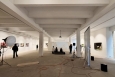
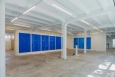
First, a new installation by artist duo Carla Arocha & Stéphane Schraenen: 20 Years and More – Works from the Collection (24 January – 24 May), pictured above, translates the chromatic structure of Antwerp as a city into immersive colour fields and reflective reflective architectural elements.
Spring
we refuse_d (13 March – 7 June 2026) highlights how creating, showing, and persisting in art can itself be a form of resistance under censorship and silencing. The exhibition brings together 15 artists in a collective statement.
Another key presentation is Stef Van Looveren’s COSMIC BODY (24 January – 17 May). Through materials that melt, mirror and merge, the installation comes to life and explores themes of transformation, fluid identity and queerness. The combination of sound, voice, materials and objects creates an environment in which identity is performed as a process of constant change.
Summer
A first major retrospective in Belgium is dedicated to Nicola L. in When the Earth Turned the Other Way (26 June – 11 October). Some 90 works across sculpture, performance, film, painting and design address feminism, diversity, equality, climate awareness and political engagement.

RATIO by Jean Katambayi Mukendi (26 June – 20 September), pictured above, reimagines technological systems through recycling and repurposing, presenting them as ecological and political tools. The exhibition includes large-scale sculptures and drawings.
Autumn
Lee Bul From 1998 to Now (12 November 6 – 14 February) is an exhibition that travels from Seoul to Antwerp. Through explorations of the body and technology, human and machine, nature and civilisation, the show engages with themes of utopian modernity, cyborg bodies, and experimental architecture, examining both utopian aspirations and their inevitable collapse.
Photos: (main image) ©mhka; ©museumatrisk_mhka; Arocha Schraenen TEN; Jean Katambayi Mukendi ©von Becker, David