
- Daily & Weekly newsletters
- Buy & download The Bulletin
- Comment on our articles
Related articles
Recent



Popular

Wind, not vandalism, damaged terror victims memorial

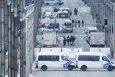
Initial fears of vandalism surrounding a temporary photo exhibition honouring victims of the 22 March terror attacks in Brussels have been dismissed, with authorities confirming that strong winds were responsible for the damage.
The installation, located next to Schuman roundabout opposite the Berlaymont and Justus Lipsius buildings, was found partially destroyed over the weekend, prompting emotional reactions from victims and their families.
According to the City of Brussels, an investigation was quickly launched to determine the cause.
“The police analysed the camera footage and questioned the workers at the construction site on Schuman roundabout” the city said.
Victor Kanyanzira, spokesperson for Brussels mayor Philippe Close, confirmed that “it appears that several panels had already been moved due to the weather conditions”, suggesting the structure had been weakened before collapsing.
The initial images of the damaged exhibition sparked outrage and distress among victims’ families and survivors, many of whom feared the act had been deliberate.
“It feels like we are being struck for a second time,” one anonymous victim said. “Seeing our faces lying on the ground like that, it is a form of violence that I cannot explain.”
The exhibition, featuring portraits and tributes, was part of the commemorations marking 10 years since the 2016 Brussels attacks.
Following confirmation that no vandalism was involved, victims’ organisations expressed relief.
“Knowing that our faces were not deliberately targeted or vandalised by individuals is news that eases much of the pain felt in recent days,” said the Life for Brussels association.
However, the organisation is still calling for clarity on how the installation could have been so severely damaged.
“The final conclusions of the investigation are needed in order to completely rule out any human intervention and to understand how structures designed for public space could have been so thoroughly destroyed.”