
- Daily & Weekly newsletters
- Buy & download The Bulletin
- Comment on our articles
Related articles
Recent




Popular


School phobia: the Brussels school dedicated to students in difficulty
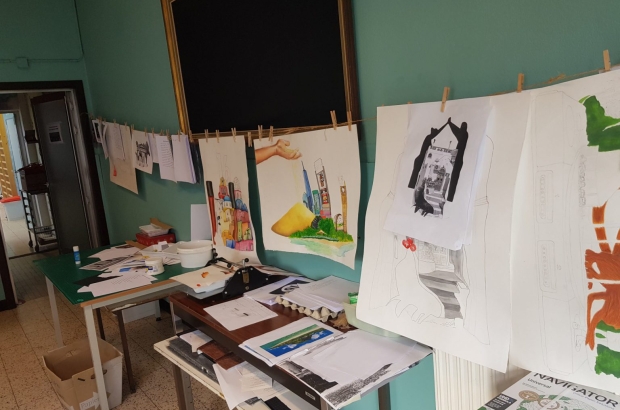
A special school in Brussels aims to combat "school phobia", an increasingly common condition in which young people are too overwhelmed with mental health struggles to function at a traditional school.
As many as one in 20 pupils are affected by some form of school phobia, RTBF reports, and the Les Ados de Robert Dubois school uses an integrated education programme based at a hospital to serve about 20 vulnerable teenagers suffering from school phobia, school dropouts or mental health issues.
Staff aim to restore pupils’ enthusiasm for learning by helping them reconnect with learning and establish social ties and a regular routine, with the aim of returning to mainstream education.
“We provide a supportive environment to help these young people get back on track, avoid staying shut away at home, and reconnect with other young people,” Jeffrey Tallane, the school’s headteacher, told RTBF.
Young people, often under the care of child psychiatrists, gain access to a transitional environment designed to gradually reintegrate them into a standard school curriculum.
The programme is based on very small groups, allowing for personalised support. Pupils remain enrolled at their original school and follow the same curriculum, but at a pace suited to their needs.
“The children here are enrolled at a mainstream school. The Robert Dubois secondary school is not a school that awards qualifications,” said Tallane.
“The school coordinator receives the lessons from the original school. The children are grouped by level in pairs, threes, or sometimes even alone with their teacher.”
This setting encourages pupils to ask questions, take the time to understand and progress without fear of judgement, thereby alleviating academic pressure.
Anxiety-related school refusal appears to be a complex issue linked to multiple factors, including anxiety disorders, depression, bullying or pressure to succeed. Traditional schools, with large classes and a fast-paced timetable, can exacerbate these issues.
Working in conjunction with healthcare teams, teachers at Les Ados de Robert Dubois prepare pupils for a return to their original school, particularly by focusing on pacing, stress management and the ability to engage with the group again.
“Almost 80% of the young people in our school are receiving care from mental health and child psychiatry services,” Tallane said.
“The hospital school, a type 5 specialised education programme, will help them re-establish a routine that’s the same as that of all young people, since one of the school’s institutional functions is to set the rhythm of society.
"For example, end-of-year exams are a sort of rite of passage that allows pupils to then take a breather, go on holiday and reintegrate into the rhythm of life shared by all young people."
The rise in mental health issues among teenagers is compounded by a lack of suitable support mechanisms. The challenge is to offer alternatives capable of supporting these young people while enabling them to find their place within the school system.
“We always work with our partners, whether healthcare services or networks that support young people, such as Bru-stars,” said Tallane.
“At some point, a reality check is needed. Our teachers support the young people, prepare them, visit schools and venues before they can let the young person go.
"We must enable the pupil to recognise their abilities, and we must believe in their potential."