
- Daily & Weekly newsletters
- Buy & download The Bulletin
- Comment on our articles
Related articles
Recent



Popular


Ryanair to cut 20 Belgian routes and 1 million passengers from next winter in response to tax hikes

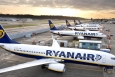
Ryanair is scaling back operations in Belgium in a bid to put pressure on Belgian politicians levying taxes on airlines, reports Belga.
It has announced that five aircraft will be cut from its operations at Brussels South Charleroi Airport and a total of 20 routes from Belgium for its 2026-2027 winter schedule. This represents a 22% reduction or one million seats, according to the low-cost airline.
The “downsizing” of its services from Brussels and Charleroi is designed to exert pressure on Belgian decision-makers.
Ryanair justifies its action by citing the federal government's intention to increase the tax on airline tickets and the City of Charleroi's plan to introduce a municipal tax of €3 per passenger at Charleroi Airport.
In July, the Belgian federal government approved an increase in the boarding tax for flights over 500km from 2027. It equates to a €5 levy for all flights over 500km to destinations such as Spain, Portugal, Greece, Morocco and Turkey, compared to a previous rate of €2 to €4.
Although the tax on flights under 500km was supposed to remain at €10, the federal government announced at the end of November that on short-haul flights this would be increased by €0.50 per year from 2027 to 2029.
Meanwhile, the City of Charleroi has decided that departing passengers will have to pay a tax of €3 per person in 2026.
The Irish company said it has written to the Belgian prime minister and other politicians requesting the cancellation of these price hikes. “Ryanair is once again calling on Prime Minister De Wever and his government to abolish the aviation tax, otherwise Belgian air traffic will collapse and fares will skyrocket, as has happened in Austria and Germany, where governments have repeatedly increased access costs," it announced.
For Charleroi mayor Thomas Dermine (PS), the municipal tax was not aimed at Ryanair but was designed to be absorbed by Charleroi Airport.
Walloon minister-president Adrien Dolimont (MR) said Ryanair's announcement should not be underestimated. “It perfectly illustrates the saying 'too much tax kills the tax'... If Ryanair removes five of its aircraft, 1,100 direct and indirect jobs (including 150 direct contracts at the airport) are likely to be impacted, not to mention the potential loss of €100 million in revenue for the Belgian economy.”
The liberal party also pointed out that the federal tax had an environmental focus and aimed to reduce CO2 emissions. “But we must be careful with the amounts, as we have always emphasised. In less than six months, we have gone from two to 10 euros, which is significant," added Dolimont.
He said the regional government would attempt to block the City of Charleroi’s municipal tax. “It’s simply a way to fill coffers because they don't want to make sufficient efforts to cut spending. To suggest that this won't be passed on to the passenger demonstrates a complete lack of understanding of the business."
The minister in charge of airports, Cécile Neven (MR), said: "We cannot weaken one of the Region's major economic engines at such a strategic time, especially when the airport has to undertake significant investments to improve its services and meet requirements."
She has called for more information on the impact of Ryanair’s decision on Charleroi Airport. “The government has provided visibility for the airport with a solid permit and a clear development framework. It's time everyone recognized this and supported the airport in the current context,” she concluded.
Last July, the Walloon government approved the operating permit for Charleroi Airport for the next 20 years. It plans to expand its operations with more flights: 4,000 more in the next six years.
Photo: ©Ryanair