
- Daily & Weekly newsletters
- Buy & download The Bulletin
- Comment on our articles
Related articles
Recent




Popular


The property market in Belgium: Buying vs renting

If Belgians traditionally aspire to owning their own home, the international community generally adopts a more conservative approach to the property market.
Belgium’s very stable real estate sector does not lend itself to a quick profit and buying property is definitely a long-term investment.
If the Brussels’ housing market appears good value compared to other major European cities, property prices are higher compared to the rest of the country, partly due to the influx of foreign residents. This is one of the reasons many young Belgians choose to move out of the capital to buy their first home.
The high registrations taxes imposed on real estate mean that you need to be sure of remaining in your home for at least five years as a capital gains tax of 16.5% applies to properties sold within this period.
Rental market
In Brussels, the region has introduced a series of measures to guide you through the rental market. It sets out the legal obligations of tenants and landlords, including who is responsible for specific types of repair work. A standard template for the check-in and check-out inventory is also available, as well as rental agreements. There are two possibilities for contracts: a standard flexible lease for a period of between three and nine years, and a rather inflexible short-term lease for contracts lasting up to three years. The first and more common option can be broken with three months’ notice and penalty payment (if you leave in the first, second or third year, you pay an indemnity of three, two and one month’s rent respectively).
Before signing a contract, landlords have a legal duty to set out the charges relating to the apartment and how they are calculated. A government website gives an indication of a property’s rental value based on its size, location and energy performance. Prospective tenants are advised to read up on the rules and regulations surrounding rental agreements and the rights and responsibilities of each party before signing any contract. Don’t forget rent is subject to an index-linked annual review.

Buying property
There are several things to consider before stepping on to the property ladder in Belgium. As well as researching the best neighbourhood for your needs, it helps to visit as many properties for sale as you can to build up an insight into the market. Alternatively, establish a good relationship with local estate agents who can assist you in your home search.
When setting your budget, it is necessary calculate the ‘hidden’ costs, which include registration tax and notary fees. The cost of buying and selling a home in Belgium is estimated to be up to 20% of the purchase price. Buying a new-build is more expensive, as VAT of 21% is charged on properties less than two years old. At ING Belgium, you can borrow money for your mortgage for up to 30 years, as well as renovation projects for your home. If you are considering buying and/or renovating a house, ING Belgium can offer you mortgage loans with terms of up to 30 years. The rates can be fixed or variable. In the case of variable rates, there are different options available, with variations either annually or every three or five years.
ING Belgium also provides a detailed five-step guide with lots of handy tips as well as a mortgage simulation tool. As well as loan advice, your bank can help you find the right loan to fund renovation projects, including energy-saving measures that could lower your utility bills.
When you buy a house or a piece of land, you have to pay a regional tax in addition to the purchase price. In Brussels and Wallonia, it is set at 12.5% of the property price. In Flanders, the figure is 3% if the buyer occupies the property within three years as their sole residence and do not own other property in Belgium or abroad.
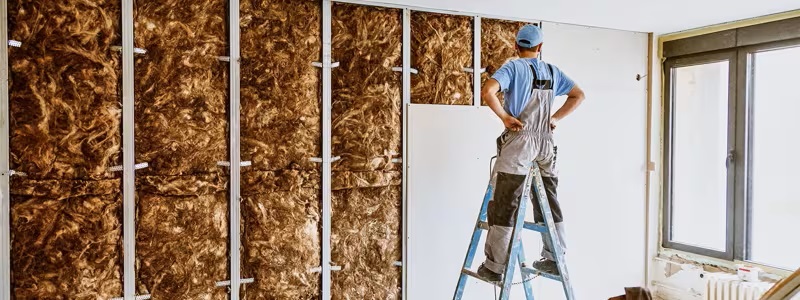
Despite the higher registration tax in the Brussels region, buyers are eligible for certain exemptions. A discount is available on duties for the first €200,000 for properties that cost under €600,000. In Wallonia, a reduced registration duty of 6% is available for lower-cost homes, and there is an exemption on the first €20,000 of the property if it is the buyer’s first home. Regional grants are also available for energy-saving renovations to your home. Don’t forget there are annual taxes to pay as a property owner, based on its cadastral income.
Once you’ve found a home, you require the services of a notary. It is typically the seller’s notary who drafts the sales agreement (compromis de vente/koopovereenkomst). If the buyer backs out there is a small fee, but the seller can withdraw without penalty. A down payment is required from the buyer (usually 10% of the total cost). The closing notarial deed (acte notarié/notariële akte) follows within four months, with the remainder of the money then changing hands.
Before signing an agreement, it is advisable to have a surveyor check the property. Again, your bank can provide a specialist who will also estimate the value of the property. It is also possible to buy a plot of land and build your own home with the help of an architect who assists with the necessary urbanism permits.
Overall, if you are planning on staying in Belgium for more than five years, it is worth considering taking the leap and buying your own home. As ever, it is important to do your homework and seek out good financial and legal guidance.
More information on financing your property purchase or renovation here.