- Daily & Weekly newsletters
- Buy & download The Bulletin
- Comment on our articles
Related articles
Recent




Popular


Private US mining company seeks exclusive access to Belgium’s Africa Museum archives

The millions of colonial archives lying in the AfricaMuseum in Tervuren are at the heart of a tug-of-war between Belgium, the Democratic Republic of Congo (DRC) and an American private company, reports RTBF.
The dispute over the digitalisation of the archives has both economic and diplomatic implications as they contain invaluable information, not only on the mineral wealth of Central Africa, but its location.
Belgium plans to digitise these valuable documents to make them accessible to the widest possible audience. But US company KoBold Metals, with the support of the Congolese authorities, would like to digitally format the archives themselves to gain exclusive access to the precious data they contain.
The archives occupy 500 meters of shelf space and date from Belgium's colonial era, which spanned the late 19th century to the country’s independence in 1960. They contain geological information on the DRC’s subsoil, which is known to contain precious mineral resources.
These mission reports, maps and records originate primarily from Belgian mining companies that operated in the Belgian Congo in the 20th century. The archives were donated to the museum when operations ceased in the 60s and 70s, explained Bart Ouvry, director of the museum.
“These are very diverse documents, some of which mention the presence of minerals that were not highly sought after at the time but are today. Just think of the contents of our computers and smartphones, certain rare materials are very valuable, and so is the information related to them, even if it’s old,” he added.
The archives extend to Rwanda, Burundi and other neighbouring countries in Central Africa as Belgian mining companies were also prospecting and exploiting deposits beyond the DRC. Belgium’s National Archives also possesses documents mapping the country’s colonial past.
While these archives are not secret documents and are accessible to researchers, curious individuals and present-day mining companies, approval must be obtained from Kinshasa to access them.
Consultation is manual, but could become easier and faster with digitalisation, which benefits from European funding as part of a support programme for the mining sector. The project was launched two years ago and is now entering its implementation phase. The entire process is expected to take several years.
But KoBold Metals, specialising in AI-assisted exploration and backed by billionaire Bill Gates, wants to digitise these documents itself in order to better map Africa’s significant reserves of copper, cobalt and lithium. These resources are of strategic importance in today’s economy and energy transition.
According to the British newspaper Financial Times, KoBold Metals benefits from the support of the Congolese government. During recent agreements between US president Donald Trump and Congolese president Etienne Tshisekedi, the latter reportedly signed a promise to hand over all the archives of the AfricaMuseum in Tervuren to the Americans.

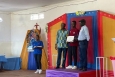
On social media X, the US company posted a photo of the Congolese minister of mines and the chief executive of KoBold signing an agreement in DRC capital Kinshasa on 17 July.
Paragraph 5 of the agreement stated: “To accelerate free access to geoscience data, KoBold Metals shall deploy a team to DRC geological records at the Royal Museum of Central Africa to begin digitising records before July 31, 2025.”
AfricaMuseum’s director is aware of the agreement. “We cannot delegate the complete management of our document archiving to a private company. We can give them access to a document, but it is impossible to allow them to privatise the entirety.”
Ouvry added: “We are aware of an agreement between the Congolese state and KoBold Metals on a number of actions, including the project to digitise archives held in Belgium. But I can tell you that neither Belgium nor the Africa Museum was a party to this agreement.”
He continued: “We have another proposal already underway which we believe fully meets the demands of our Congolese partner, namely the National Geological Survey of Congo. Our goal is truly to do our utmost and offer better access to these archives.”
The museum was clear that it had no intention of handing over the project to KoBold or any private company. “We do not want to favour one company over another. Privatising our archives would give a significant commercial advantage to one company, which would not be fair and would not correspond to our identity as a public and scientific institution,” concluded Ouvry.
The American company's ambition has also sparked outrage among Belgian political authorities, including the minister for digital affairs and science policy, Vanessa Matz (Les Engagés).
“Belgium cannot grant privileges and exclusive access to a foreign private company with which it has no contractual ties, as this would impact research and public access. The archives must be made available in accordance with applicable Belgian and European regulations. The archives must be accessible to researchers and the general public,” she added.
Matz’s cabinet said exchanges between Belgium and the DRC were “sustained and continuous,” particularly in the scientific field. These contacts focused on geological research needs as well as ongoing results and projects.
Brussels also highlighted its desire to see the Congolese state and its population benefit from the archives. The digitisation programme supported by the European Union includes the installation of two servers, located in the AfricaMuseum, the other in the DRC.
Photo: ©AfricaMuseum, Tervuren; ©KoBold Metals on X