
- Daily & Weekly newsletters
- Buy & download The Bulletin
- Comment on our articles
Redevelopment plans for the Josaphat site "still lacking," says committee
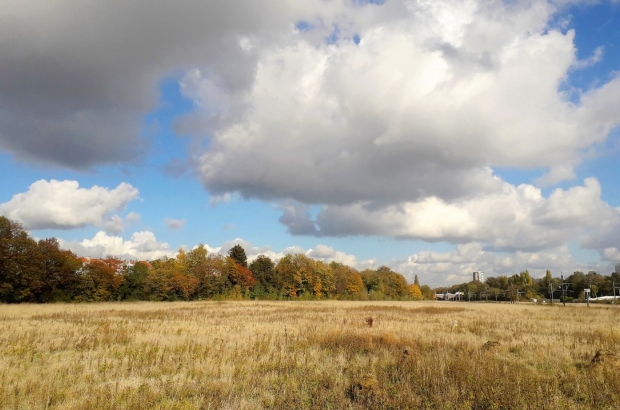
The Regional Development Commission has delivered a harsh assessment of the plans for redeveloping the Josaphat site in Brussels, reports Bruzz.
The commission is made up of 18 independent multidisciplinary experts appointed by the government. It says there has been insufficient cooperation between the interested parties, resulting in division, the mobility aspect of the plans needing drastic improvement, and the biodiversity of the habitat not being sufficiently taken into consideration.
With its 25 hectares, the Josaphat site is one of the larger land reserves in the region. The Brussels government would like to build 1,200 homes, schools and a park on the old railway site. This is only possible if there is a new urban framework for the zone, a Master Plan of Construction (RPA).
The latest proposal submitted by the government – the second RPA after the first was rejected in a storm of criticism – has caused some concern within the committee. While its opinions are not binding, its findings will be keenly followed by both supporters and opponenets of the project.
The committee is critical of the lack of participation and 'working things out together' among citizens and associations involved in the realisation of the project, which has led to a dynamic of dispute in the case.
In terms of mobility, the committee finds that the RPA is inadequate for cyclists as there are no clearly marked cycle paths, and pedestrians with reduced mobility have been ignored.
The region's plan to build a lot of homes on the site is viewed positively by the committee. However, it notes that only 22% of these homes are social housing, despite the need for this type of housing.
The sharpest criticism is reserved for the environment/biodiversity component of the project. The committee notes that the part of the RPA dealing with the preservation and redevelopment of the natural surroundings is 'quite weak'. "Biodiversity is rarely discussed," it says. The committee also notes that, "although the design of RPA refers to one large contiguous park, in reality this is not the case: there are several parks that complement each other, but that do not consist of one piece."
The committee therefore asks the government to consider connecting the site to zones that lie outside the perimeter of the RPA, such as the former Nato site and the nearby Josaphat Park, with which the new Josaphat site can form a whole. The advice refers several times to the concept of 'green fingers', which was originally conceived in Copenhagen, in which strips of greenery and water connect with each other throughout a city to bring coolness and biodiversity to it, among other things.
"The commission considers that efforts to bring about changes to the plan at urban and planning level are insufficient,” it concludes. “One construction phase has indeed been deleted, but this is insufficient to take into account the biodiversity present. Even if there is a follow-up showing that species have disappeared, it will still be too late. Establishing afterwards that species have disappeared serves no purpose."
Although the advice of the committee is not binding, it is still waiting for the advice of the consultation committee, which has to deal with almost 2,000 responses from citizens and organisations during the public inquiry into the RPA.