
- Daily & Weekly newsletters
- Buy & download The Bulletin
- Comment on our articles
Brussels launches breastfeeding campaign
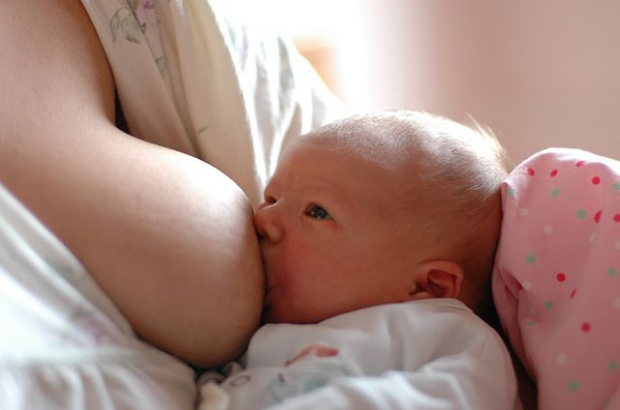
A campaign encourages the food-service industry in Brussels to be welcoming toward breastfeeding mums. The campaign was launched by four well-known businesses in the capital this week, which is World Breastfeeding Week, and is supported by Unizo, the organisation that represents the self-employed in Flanders and Brussels.
The campaign is intended to designate restaurants and bars as safe spaces for breastfeeding. Businesses can put a sticker in their windows that welcomes mums with babies inside.
According to a poll, only half of mums feel comfortable enough to breastfeed in public places, though circumstances often make the option unavoidable. By contrast, three in four mothers think breastfeeding in public should be perfectly acceptable, according to the Volle Maan expertise centre, which launched the campaign together with four Brussels bars.
Those bars – Chicago Café, Kaffabar, Monk and the bar at Recyclart arts centre – are displaying the sticker but go a step further with a free glass of water, help with buggies, breastfeeding cushions and diaper-changing facilities.
The website featured on the sticker – wegwijsborstvoeding.be – lists venues in Brussels and Flanders that welcome breastfeeding mums.
In related news, Serena Debonnet, president of the Belgian Association of Lactation Experts, has told Het Nieuwsblad that children should be given lessons on breastfeeding and mother’s milk in primary school. Her call coincides with World Breastfeeding Week, from 1 to 7 August, during which experts across the world campaign to raise awareness about the importance of mother’s milk.
The World Health Organisation’s (WHO) official recommendation is to feed babies only mothers’ milk for the first six months. Figures provided by Flemish family agency Kind en Gezin, however, show that half of babies in are either partly or completely fed with a bottle after only six weeks.
“If you ask young children how babies are fed, they mostly answer that it is done with a bottle,” said Debonnet. “They seem to be unaware that breastfeeding exists, even though it is completely normal.”
Debonnet co-ordinates the WHO’s Baby-Friendly Hospital Initiative in Belgium, which works through the federal governments’ public health department to promote breastfeeding in hospitals. She would now like to see children in primary school taught about breastfeeding.
The lessons would not serve to explain in detail how breastfeeding works, she explained, but to familiarise children with the concept and inform them of the advantages. “That’s a message they will carry with them for a long time,” she said.
A few years ago, Debonnet organised workshops in schools, with amongst others a mother who breastfed. The children could also practice themselves with tools in bras. “There were no negative reactions of schools or parents then,” she stated.
Photo: Anton Nossik/Wikimedia