
- Daily & Weekly newsletters
- Buy & download The Bulletin
- Comment on our articles
Brussels Central terrorist suspect could be linked to IS
The federal prosecutor’s office of Brussels has announced that it has found evidence linking the perpetrator of Tuesday night’s failed terrorist attack at Brussels Central Station and Islamic State.
Oussama Zariouh, a 36-year-old Moroccan national who had been living in Belgium since 2002, caused a small explosion with his suitcase inside the station at approximately 20.45 on Tuesday. He did not succeed in detonating a larger explosion.
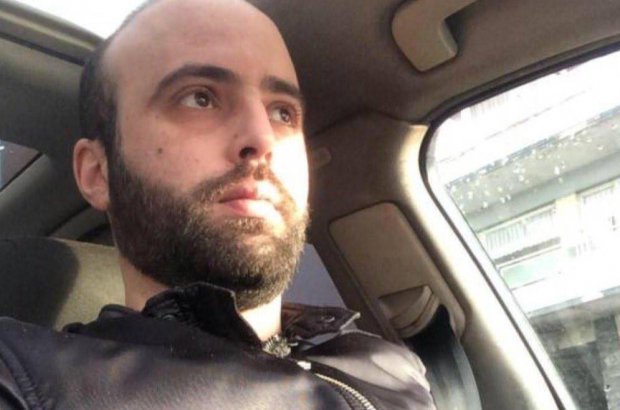
Zariouh (pictured) was shot and killed at the scene by military guards. Military personnel have been patrolling busy areas such as train stations since the terrorist attacks in Paris of November 2015, which had links with Brussels.
At a raid of Zariouh’s house in Molenbeek in the aftermath of the attack, the federal prosecutor said that investigators had found the same kind of explosive materials that were used in the March 2016 attacks at Brussels Airport and metro station and in the attacks in Paris.
They also found indications that link Zariouh to IS. The prosecutor confirmed that the incident was being considered as a terrorist attack.
Zariouh walked into Brussels Central at 20.39, according to the prosecutor, making his way towards passengers downstairs. Standing in the middle of a group of passengers, he took up his bag and caused a small blast.
Although nobody was hurt, the suitcase caught fire. He left his burning luggage, which then exploded a second time and was later found to contain nails and glass bottles.
“The man then returned to the station hall, ran towards a soldier and cried “Allahu Akhbar”, or “Allah is greatest”. The military opened fire, shooting him several times.
Initially, the man was thought to be wearing a suicide bomb belt but investigators said this was later found to be material to detonate a bomb and that’s why witnesses and military at the scene had seen wires hanging from his body.
Zariouh was known to the police for drug-related incidents but not for radicalisation. Nor was he on the list of OCAM, the co-ordination unit for threat analysis.
Photo courtesy Media Studies Center/Facebook