

- Daily & Weekly newsletters
- Buy & download The Bulletin
- Comment on our articles
European mission looks at language issues in Flemish periphery
The Council of Europe sent a mission to Belgium last week to visit Flanders’ “facility municipalities” in the Flemish periphery around Brussels.
Six cities in Flemish Brabant that border the Brussels-Capital Region and are home to many French speakers are facility municipalities: Drogenbos, Kraainem, Linkebeek, Sint-Genesius-Rode, Wemmel and Wezembeek-Oppem. Although the official language is Dutch, these facility municipalities offer administrative services in French to residents on request.
The language situation in these places has led to incidents between French speakers – who are in the majority there – and the government of Flanders. In 2006, the government refused to officially appoint three mayors – in Wezembeek-Oppem, Kraainem and Linkebeek – after they broke the language laws by sending out voting information in French.
Because of disagreements in the interpretation of language laws, scuffles regarding the situation have been going on since the 1970s. Today, they have largely died down – except in Linkebeek, where Damien Thiéry (MR) is not giving up the fight to be appointed mayor.
Last week, Belgium’s Council of State rejected an appeal by Thiéry, vindicating the government of Flanders’ decision to refuse to appoint him. In the same week, the Council of Europe, at the request of a number of local French-speaking politicians, sent its Congress of Local and Regional Authorities on a mission to visit the facility municipalities.
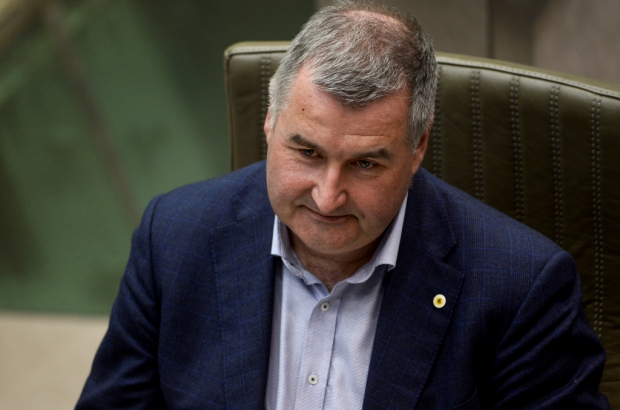
The timing was “an irritating coincidence”, according to Flemish MP Karim Van Overmeire (pictured). Van Overmeire (N-VA) is a member of the Congress of Local and Regional Authorities and is one of the people the mission met with last week.
"The fact that the mission physically visited Linkebeek implies that something is terribly wrong there," says Van Overmeire. "The truth of the matter is that the situation in the Flemish periphery has calmed down considerably in recent years."
Wouldn’t it be easier if municipalities like Linkebeek were just declared bilingual, like Brussels? "I have heard this argument before," he says. "But essentially this is about the structure of Belgium, with delicate balances that are the result of long negotiations. Respecting these agreements is the essence of the Belgian compromise. Not respecting one of the balances would unsettle the whole construction. Linkebeek has been part of Flanders since 1962. Everyone knows that, just like everyone knows that Dutch is the official language in Flanders.
"Of course demographics can change, but that changes nothing about this situation. Demographics change in London, too. English might not be the first language spoken in some parts of London, but it still remains the official language. In that sense, we are acting no differently than the Germans do in Germany, the Portuguese in Portugal or the Polish in Poland. You can have private conversations in whatever language you please, but the official language is that of the region you live in. We even offer French-language facilities, a right that we respect rigorously."
Photo: Dirk Waem/Belga





Comments
Imo, the Belgian "language laws" are totally absurd to begin with. And the way they are enforced in some Flemish regions is ridiculous. I remember when the mayor of De Panne (La Panne) added a few paragraphs in French to his town's newsletter. The Flemish government intervened and forced him to stop. Illegal to use French in Flanders......
For me, the worst one was a Catholic mass being conducted in French in one of the communes around Brussels. Someone actually called in the police to have the mass stopped. And the police showed up and actually stopped the mass.
If Van Overmeire is just one of the people the mission met, it would have been interesting to read quotations from someone with less intransigent views than the member of the Flemish nationalist party N-VA...perhaps someone representing the large francophone majority living in those "facility municipalities"?
Oh, and just to respond to his glib point about London: voter information is available there in
French as well as Arabic, Bengali, Chinese (simple), Chinese (traditional), Gujarati, Italian, Lithuanian, Persian, Polish, Portuguese, Punjabi, Romanian, Somali, Spanish, Tamil, Turkish and Urdu.