
- Daily & Weekly newsletters
- Buy & download The Bulletin
- Comment on our articles
Related articles
Recent



Popular


Brussels’ new cultural landmark: Can Kanal transform the city beyond its walls?

Belgium is known across the art world for its prestigious art schools, innovative artists and numerous private art collectors. It is only fitting, then, that Brussels would get to host Europe’s newest contemporary art museum – cementing its place on the international scene as one of the art world’s most important hubs, alongside Paris and London.
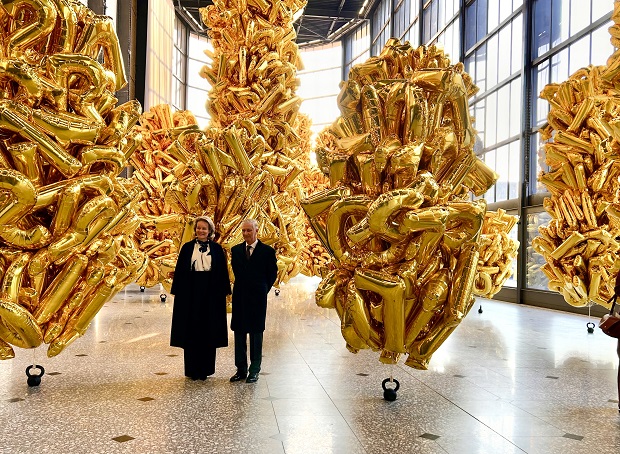
Kanal-Centre Pompidou officially opens its doors on 28 November, after a 13-year wait peppered with political changes and financial uncertainty. The museum hosted the press and art world leaders this week, as well as King Philippe and Queen Mathilde (pictured above), offering tours highlighting both its inaugural exhibits and its landmark 1930s building, the former Citroën garage, on the banks of the canal.
While taking one of the tours, one person remarked he is revisiting the building “where I bought my first car 30 years ago.”

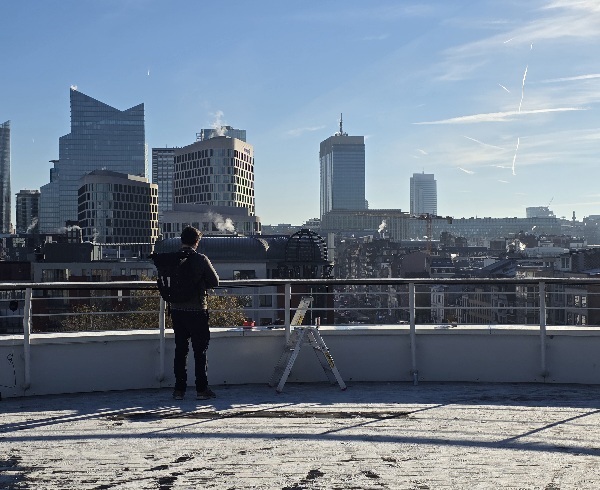
The vast site encompasses 10 exhibitions as well as a bakery, restaurants, a bookshop, an architecture section, a children’s playground and a rooftop that echoes the streamlined shape of barges plying the adjacent canal. Its sleek Art Deco styling and vast panorama of the city, sweeping from the Basilica in Koekelberg to the Justice Palace and North District towers, make it a future place-to-be.

The inaugural show, An Immense Journey, spans three floors and features both contemporary and modern art, including a list of household names. Visitors are greeted by a walking sculpture of Alberto Giacometti, works by Marcel Duchamp, one of the founding fathers of conceptual art, and a series of photo stills from Belgian moviemaker Agnes Varda. Upstairs, Matisse and Picasso await. The show culminates in a series of interactive installations which museum curators have dubbed “the playground”.
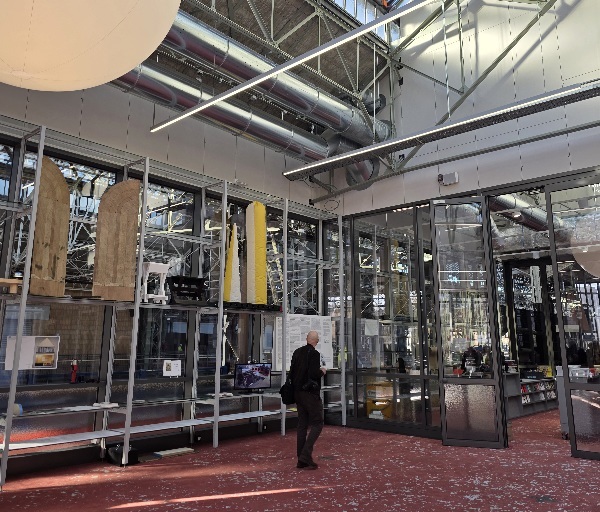
But the ambitions of Kanal go well beyond displaying artworks. Spanning 40,000 square metres, the museum aims to become a public space where art, architecture, music, performance and everyday life come together. Around half of the building will be accessible without tickets, offering visitors a library, workshops, community spaces, a rooftop terrace, restaurants and even an indoor playground.
For the surrounding neighbourhood, this could be a significant change. The canal area has long struggled with social and economic challenges, and the museum is part of a broader ambition to revitalise this northern part of Brussels by bringing in visitors, creating jobs and stimulating local businesses. Kanal expects to generate hundreds of direct and indirect jobs, while its cultural programme could provide new opportunities for local artists and organisations.
Brussels has a thriving contemporary art scene, but has lacked a major public institution dedicated to modern and contemporary art. The Centrale for Contemporary Art and MIMA both recently closed. Through a partnership with the Centre Pompidou in Paris, Kanal gains access to an internationally renowned collection, while gradually developing its own. Its programme will also showcase Belgian and Brussels-based artists, potentially giving the local creative community a much-needed platform.
First announced in 2013, the project saw its opening date postponed seven times. The pandemic, permit complications, problems with contractors and Brussels' prolonged political deadlock, which left the region without a government for a record 613 days, all contributed to the delays. The original construction budget has ballooned from around €163 million to an estimated €238 million.
Financial questions haven't disappeared as of yet. This year, the institution will receive some €28 million from the Brussels Region, a sum that will fall to €10 million by 2029. It remains to be seen whether museum leaders can amass enough private support by then to make up the difference. Some critics have also questioned the cost of the partnership with Centre Pompidou and whether enough space and resources will be dedicated to Belgian artists.
Ultimately, Kanal's success will depend on whether it can become more than an impressive architectural landmark. Its real achievement would be to make contemporary art accessible to people who might never otherwise walk into a museum, while giving Brussels' cultural community a lasting home.
Photos: ©Atelier Kanal; King Philippe and Queen Mathilde ©Ana Fota; KANAL AK W Buyse; interior ©Atelier Kanal; A truly immense journey - Graverol-LAfrique inconnu, Decroos