
- Daily & Weekly newsletters
- Buy & download The Bulletin
- Comment on our articles
Related articles
Recent



Popular
Brussels taxis given two extra years to switch to zero-emission vehicles
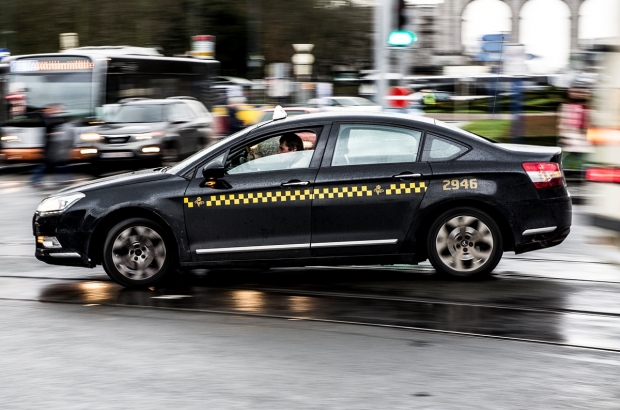
The Brussels government is extending the maximum service life of existing fossil-fuel-powered taxis from seven to nine years.
According to Brussels Mobility, 300 to 350 cars with internal combustion engines were due to be replaced by 2027. These vehicles will now be allowed to remain in service until 2029.
The increase in the age limit gives taxi operators an extra two years to prepare for the switch to electric vehicles and to make the necessary investments, according to the region’s state secretary, Karine Lalieux (PS).
From 1 January 2027, only zero-emission new taxis may be registered as new vehicles and no new taxis with internal combustion engines will be allowed to be registered.
Additionally, if a vehicle is temporarily unavailable - due to an accident, breakdown, fire or theft - an operator may use a replacement vehicle with an internal combustion engine for a maximum of one year.
There will also be a general exemption from the mandatory zero-emissions requirement for taxis serving people with reduced mobility, “to safeguard the service provision in Brussels”.
“We remain on course for electrification, but are not asking taxis to change vehicles before their operational lifespan has expired,” Lalieux said, adding that the transitional measures offer the taxi sector "breathing space", and the government was “taking into account the economic reality of the transition” and “the infrastructure required for this”.
To support the transition, the region is accelerating the roll-out of 100 to 150 fast-charging points by the end of 2028. Measures are also being introduced to improve working conditions and to establish a recognisable visual identity for street taxis - those operating for online platforms such as Uber and Bolt.
Lalieux also announced that the government is considering granting street taxis access to bus lanes “under certain conditions and in consultation with [Brussels public transport operator] Stib”. Currently, only official taxis operating from taxi ranks are permitted to use them.
Brussels currently has 3,129 taxis, 2,430 of which - more than three quarters - still run on internal combustion engines.
Despite the extension and supporting measures, the sector remains extremely critical of electrification.
“We are extremely concerned about this; electric cars are not yet ready,” Abdel Sabbani, chairman of the Brussels Taxi Federation (BTF), told Bruzz.
“They cost more to buy, and any minor fault with the battery means it has to be replaced, which costs thousands of euros.
"They’re worthless on the second-hand market - nobody wants them - and the range is still far too low. Taxi drivers spend one to two hours every day charging, which are hours during which they earn nothing. What’s more, there are far too few charging points."
Sabbani is also critical of the measures for street taxi drivers, who regular taxi drivers have long accused of undermining the market via foreign tech platforms such as Uber and Bolt.
“It’s unacceptable to us that street taxis should receive all the benefits without paying for the official and expensive licence,” Sabbani said.
“Moreover, we will run into problems with Stib if suddenly twice as many taxis are allowed to use the bus and tram lanes. That will cause congestion and they will ban us all.”
The trade association Union des Chauffeurs de Limousine Belge (UCLB), which represents street taxi drivers, is cautiously positive about the agreement on the transitional measures.
“We welcome the work carried out by state secretary Lalieux, in particular the extension of the operational life of the vehicles,” said spokesperson Asmaa Snaïbi.
“However, we regret that the government has been unable to reach an agreement on postponing the deadline for electrification. That would have given the sector more time to prepare for this transition under favourable conditions.
"We do, however, welcome the proposals to give street taxis greater recognition and make them more visible, such as the possibility of using certain bus lanes.
"This contributes to a better integration of street taxis into Brussels’ transport system and to a clearer recognition of their role."
Sabbani accused political parties such as Groen, Les Engagés and MR of acting on behalf of the major foreign tech platforms.
“They must stop pitting taxi drivers against one another and listen to our real problems. Our turnover is under severe pressure,” Sabbani warned.
“If those measures do come into force, the Brussels government will have a problem on its hands. We will mobilise en masse.”