
- Daily & Weekly newsletters
- Buy & download The Bulletin
- Comment on our articles
Related articles
Recent





Popular




Mental health in Belgium: Addressing the challenges for men beyond the cliches
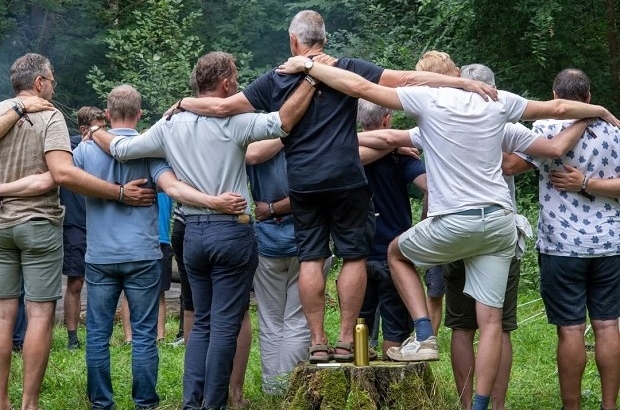
“Boys don’t cry” and “men don’t talk about their feelings” may be clichés, but these ideas still have a profound impact on men’s mental health. As a result, men are less likely than women to seek help and are more prone to addictions and suicide. But adjusted therapy strategies, targeted awareness campaigns and grassroots initiatives such as an annual festival are gradually turning the tide in Belgium.
It was at a New Year’s party almost 15 years ago that Richard Gordon Kelly fully realised something was wrong. “I looked at all the people enjoying the party around me, felt they were happy, and realised I was definitely not,” he recalls. “I left that party and in the period that followed, I started talking with friends about what I now knew was depression. And it helped.”
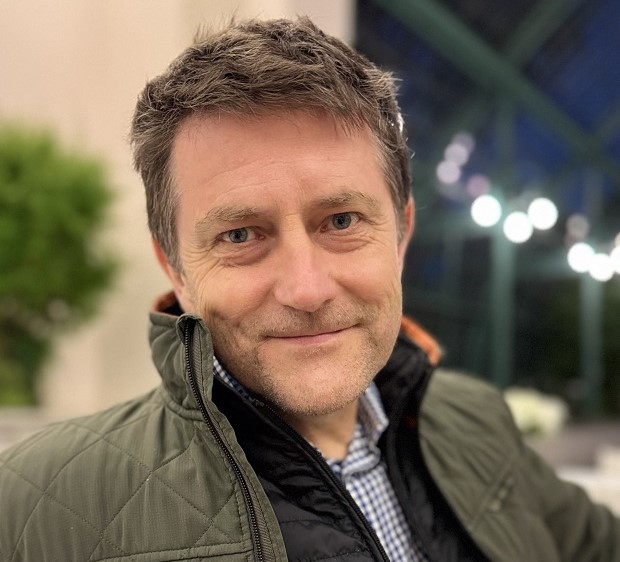
Kelly (pictured above), a British expat living in Belgium for more than 20 years, was going through a divorce at the time but depressive feelings had been part of his life for much longer. “Even in my early teens, I struggled with feelings of anxiety and disconnection, and I experienced depressive feelings and loneliness during different phases of my life. But I always liked to be the person you could rely on, who got things done, which is perhaps why it took me so long to recognise that I needed support as well.”
Growing up in the UK, talking about his emotions didn’t come naturally for Kelly, who is now 57. “Like many boys from my generation, I wasn’t really encouraged to talk deeply about feelings,” he says. “It wasn’t that the emotions weren’t there, we just didn’t have much language for them.”
Opening up
While Kelly managed to overcome his troubles by opening up in time to the people around him, many men are not able to take this step and don’t seek professional help either, with serious consequences for their mental health. Much of this is down to the different ways men and women are raised, says Jean-Charles Le Febvre, clinical psychologist at the CHS Mental Health Centre in Brussels, which offers psychological support in English.
“Many people were taught from a young age that girls shouldn’t show anger and that boys shouldn’t express sadness,” he explains. “That’s why men often have the tendency to try to remain strong and carry everything on their shoulders. If they keep avoiding their issues, they are at risk of addictions, isolation, depression and even suicide.”
Concerning suicide specifically, the figures are striking. The latest figures from statistics agency Statbel show that men account for 68% of deaths by suicide in Belgium. A more recent study by the Flemish government found that in Flanders, the figure is more than 73%.
Jan Van Beeck, 74, from Holsbeek in Flemish Brabant, almost became part of these sad statistics in 2018. “After being depressed and struggling with severe alcohol problems for decades, I attempted suicide late one evening, but survived,” he says. Van Beeck became addicted to alcohol at a young age, as a destructive form of escaping a tragic home situation. “My father left us when I was a teenager and my mother was heavily depressed and attempted suicide multiple times. She died by suicide in the end, and so did my brother.”
Sharing his story
After his own suicide attempt, Van Beeck checked in to a psychiatric hospital. “I finally admitted that I couldn’t solve this on my own, which is not easy for men in general.” He managed to quit drinking and turned his life around, in part thanks to antidepressants and meditation. “I’m completely happy now,” he says.
Van Beeck has shared his story in various media and in schools, in the hope that other boys and men don’t wait so long to seek help. “I want to help break this taboo on mental health problems that still persists among men,” he says. “I have experienced myself how we, as men, have trouble showing vulnerability and prefer to make jokes about our problems. I have seen too often how that prevents men from overcoming their addiction, so that this kills them in the end.”
His testimony is part of Kom Uit Je Kop (Get Out of Your Head), an awareness campaign about men’s mental health by the Flemish Centre of Expertise in Suicide Prevention (VLESP). “With our actions, we first of all want to send out the message that there is a societal problem, which makes it more difficult for men to be open about their struggles and look for help,” says VLESP researcher Pauline Stas, the driving force behind the campaign. “It’s important to not point the finger at men.”
The initiative encourages men to talk about their problems, with the people around them or a professional, and Stas emphasises that there are different ways to make this a more comfortable experience. “A simple strategy can be to talk shoulder to shoulder instead of face to face, as research suggests this facilitates conversations for men. Talking while taking a walk can also help to lower the threshold.”
Finding connections
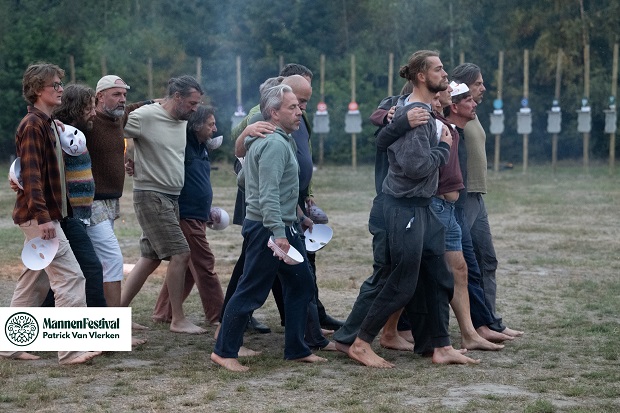
Mental health professionals are increasingly aware of what generally works better for men in therapy, Stas explains. “Men often look for practical solutions, so it can be useful to work first towards some quick wins to build confidence and then be able to go deeper. Presenting a structured approach can help too, and using humour as well.”
According to Le Febvre, there is a consensus that men are more responsive to therapies that are more oriented towards working on concrete goals, like cognitive behavioural therapy. “But it’s also important to stress that psychotherapy is not the only way to deal with mental health,” he adds.
“Men who are finding it difficult to express themselves verbally can benefit from outdoor activities, forest bathing or mindfulness. What is crucial is that they find connection. With other people of course, because being connected to people that you love is the main factor for happiness. But connecting to nature can help a lot as well.”
For Le Febvre, many men are also struggling with the changing role of men in society, especially in the last decade. “There are a lot of men who are uncertain about how they have to behave,” he says.
That uncertainty drives some towards the manosphere or to far-right movements. “The manosphere fills a need for men who are looking for answers on what it means to be a man,” says Stas of VLESP. “Men lack positive role models and receive too few positive messages: for example, that it’s fine to express your emotions in other ways than crying. The current climate can be very polarising, which doesn’t help.”
Healthy masculinity
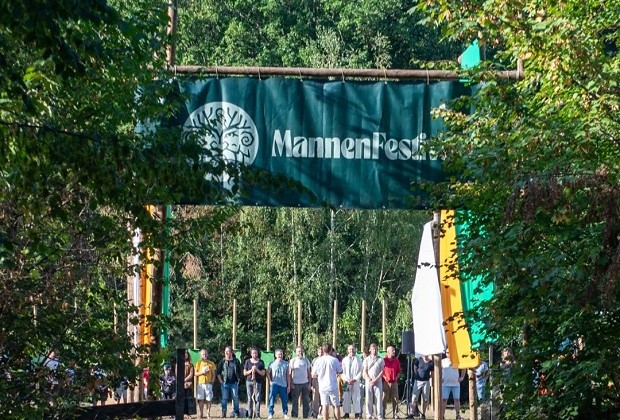
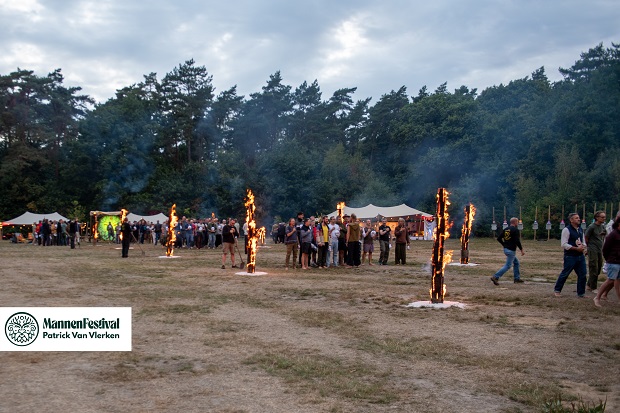
In the last decade, many initiatives have sprung up in Belgium that encourage the healthy development of male identity. In Flanders, there is a whole network – the MannenNetwerk – of organisations and activities, such as workshops and talking circles. Many of these have grown from the MannenFestival, the annual men’s festival in Flemish Brabant.
“While we don’t explicitly focus on mental health, this is the festival programme’s common thread,” says spokesperson Gino Peremans. “We try to meet this need among men by offering a sense of belonging, a brotherhood without a hierarchy or need for competition. Specifically, the festival has a very diverse range of workshops, so everyone can find something useful for them. You can chop wood, discuss intimacy, let your anger out in a safe space, meditate…” There are spiritual activities, but also some that focus on the business world.
While the first edition attracted 60 people to the Meerdaal Forest, the festival now accommodates around 450 men. The organisation is also thinking about setting up an international event and is developing a series of activities throughout the year. There will be a workshop on suicide prevention, in collaboration with VLESP, in September. “We are trying to bridge the gap with the regular healthcare sector, to offer inspiration for preventive strategies,” says Benjamin De Preter, who will be giving the workshop. He also has expertise in communication and dance workshops.
The festival this year had a specific programme for boys, to help them develop healthy ways of being a man. But the best way for them to learn that is perhaps through their relationship with their father. The festival offers workshops on fatherhood. “It’s crucial for all children, both boys and girls, to have a good example,” says psychologist Le Febvre. “A father can, through his experience, show that it is OK to feel sad about something.”
Good to talk
For Richard Gordon Kelly, who has a son and a daughter, it’s clear that “children learn as much from how we are as from what we tell them”. “So if they see that adults can be honest and open, it gives them permission to do the same,” he explains. On the relationship with his son, who is 18, he adds that “more than teaching him what to do or how to feel, I want him to know that whatever he experiences, he can bring it into the conversation. And he does. It’s important to aim to always clear things up and express what’s going on.”
Using his own experiences, Kelly has worked in his coaching capacity with athletes, people in business and teams of organisations to take better care of their psychological well-being. For himself, it has made a big difference to find ways to “not believe every thought that pops up in my mind”. Being active, for example riding his motorcycle, helps to clear his head. And this passion also inspired him to write a collection of poems on mental wealth. “Which, as someone with dyslexia, takes me a lot of time, but it’s worth it.”
The Open Hand
The tightest grip, the firmest hold,
Cannot command what must unfold.
But hands left open, soft and wide,
Receive the gifts life holds inside.
Let go, let trust replace control,
Allow the tides to shape the whole.
For wisdom flows, not bound, not planned,
It moves to meet the open hand.
Support (Many of the Dutch-language services can also respond in English)
Centre de Prévention du Suicide Suicide prevention centre and crisis helpline (Fr)
Community Help Service (CHS) Mental health centre and crisis helpline (Eng)
Un pass dans l’impasse Brussels suicide prevention centre (Fr)
VLESP Flemish Centre of Expertise in Suicide Prevention (NL)
1813 Suicide helpline (NL)
MannenNetwerk Support network for men (NL)
MannenFestival Annual Men's Festival actively contributes to the integration and anchoring of healthy masculinity in the world (NL)
For more information on suicide behaviour and mental health services in Belgium: Mental health care in Belgium: National survey plus where to get help and support | The Bulletin
The production of this feature was supported by a grant from the Local Innovative Media In Europe Network (LIMENet), co-funded by the European Union.


Photos: MannenFestival