- Daily & Weekly newsletters
- Buy & download The Bulletin
- Comment on our articles
Related articles
Recent





Popular
Belgium comes fourth in European LGBTQ+ rights ranking
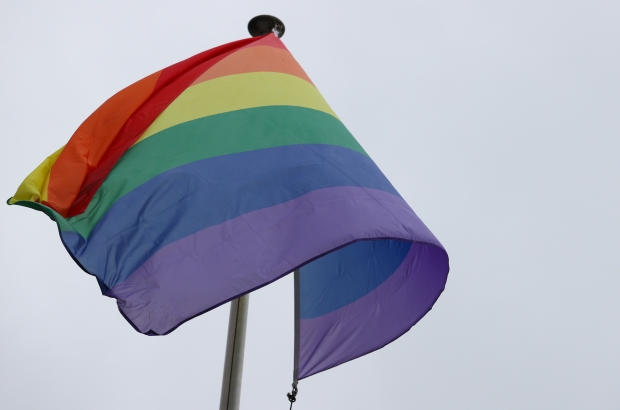
Belgium has dropped to fourth place on the Rainbow Map, the annual European ranking for LGBTQ+ rights from umbrella organisation Çavaria.
“We’ve achieved the same score as last year, but other countries are making progress and overtaking us,” said Caroline Gennez (Vooruit), Flemish minister for equal opportunities, adding that all of Europe must be on guard against the weakening of LGBTQ+ rights.
"Ideas and concepts that we long considered established are being eroded," she added. "International solidarity is needed."
Çavaria warns that other countries are overtaking Belgium because the country is neglecting a number of issues, including impunity for online hate speech.
“The sense of insecurity for the LGBTQ+ community peaks on social media,” the organisation said in its report.
Spain, Malta and Iceland form the top three in 2026 in terms of LGBTQ+ rights, with Turkey, Azerbaijan, Russia and Romania taking the bottom slots with the lowest scores on laws and policies for the protection of LGBTQ+ people.
Belgium is performing relatively well and has achieved a number of perfect scores in certain categories, namely "space for civil society", "family" (referring to the recognition and protection of the family rights of LGBTQ+ people, such as same-sex marriage, adoption and trans parenthood), and for policies against hate crimes and hate speech.
Çavaria also noted that there is no legal solution for non-binary people, who remain forced to choose between male or female for the official registration of their gender despite the fact that the Constitutional Court already ruled that non-binary people are entitled to recognition in 2019.
“For seven years now, the federal government has been ignoring the court’s ruling,” Çavaria said.
Çavaria also highlighted the protection of intersex minors against unnecessary medical interventions. While the chamber adopted a resolution on this in 2021, it has not yet translated it into law.
“As a result, unnecessary, invasive operations can still be performed on children simply to make their bodies conform to a social norm,” said Çavaria.
Çavaria called on the Belgian governing parties to take action against these issues and sees opportunities to do so in the inter-federal LGBTQ+ action plan due to be published shortly.
“The federal governing parties can now prove that Belgium still wants to be a frontrunner for equal rights,” the organisation said.
Federal minister for equal opportunities Rob Beenders (Vooruit) said the latest report sent a clear warning: “Progress is never a given, and acquired rights remain strong only if we continue to protect, strengthen and embed them.”
Beenders said Belgium intended to focus on, among other things, a stronger approach to online hate, better information on rights and raising awareness about diversity and respect.
Unia, Belgium’s independent public service combating discrimination and promoting equal opportunities, warns that homophobic violence remains a reality in Belgium.
Its latest report with the Institute for the Equality of Women and Men found that this violence is occurring as reactionary rhetoric gains ground in Belgian society.
According to newly released 2025 figures, Unia received almost one report every day, totalling 311 reports. This figure remained stable compared to 2024.
The majority of the opened cases concern incidents of assault in public spaces, followed by incidents in the workplace.
Unia has also noted an increase in homophobic harassment in the workplace. The third most-common area in reports made by LGBTQIA+ people is the media, often involving cases of insults on social media.
“Gay men are more likely to report incidents,” said Unia head of communications Oliviero Aseglio.
“They generally make greater use of a range of services than women, and feel more justified in doing so.”
The organisation emphasised that many people do not report the incidents they experience to the police or to bodies such as Unia.
“What’s also important is that, for other categories such as racism, ageism, disability and ableism, cases of violence are much rarer,” said Aseglio.
“We see many cases of discrimination, such as people being refused housing, entry to a shop, or a job. For the lesbian, gay, bisexual and transgender people we support, this proportion has increased, but it’s accompanied by a very high proportion of violent acts.”
RainbowHouse Brussels and Prisme - the Brussels and Walloon federations - also highlighted the emergence on social media of certain reactionary movements, such as masculinism, which could heighten the risk of verbal and physical violence against LGBTQIA+ people.
“If we want to combat a society with homophobic undertones, we need to raise awareness even among the perpetrators,” Aseglio said.
“There are, of course, situations where people are a danger to society and sometimes they need to be removed from society.
"Some people have been guilty of homophobic attacks and must pay for their crimes, but we must be able to work on raising awareness amongst these people, so that their homophobia doesn’t worsen.
"We won’t solve the problem simply by locking people up. We also need to address what motivated these people to become homophobic."
Unia and the Institute for Gender Equality are calling for ongoing training for educators to combat discrimination and prevent LGBTQIA+ violence.
“We believe it is essential that LGBTQIA+ issues are addressed in schools from a very young age, using appropriate vocabulary and, of course, appropriate examples,” said Aseglio.