
- Daily & Weekly newsletters
- Buy & download The Bulletin
- Comment on our articles
Related articles
Recent




Popular


Women’s Day focus: The patient was never me. But it might be you

Woman. Black. European. Physical chemist. CEO. Board director. Climate policy insider in Brussels. The technical term for someone like me is statistical anomaly. The practical term is inconvenient data.
Belgium has a long history of deciding who counts. Women got full voting rights in 1948, the penultimate Western European country to grant them. Until 1958, a woman needed her husband's permission to open a bank account. The first Black woman reached the federal parliament in 2024, 76 years after women got the vote. Isala Van Diest, the first Belgian female medical doctor, had to leave the country to practice medicine because Belgium would not let her. Across the colony Belgium ran in Congo from 1885, Congolese women held centuries of medicinal plant knowledge. That knowledge was never recorded in the archives that built Belgian science.
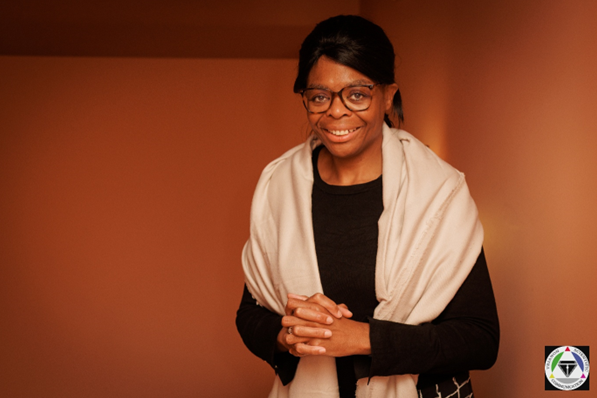
Dr Audrey-Flore Ngomsik (pictured above)
Belgium chose not to see these women. They were inconvenient data.
You think that the fight for equality and equity is won? Keep reading.
Let’s talk about your health.
Medicine decided the reference patient was male, white, 70 kilograms, hormonally stable. Women were excluded from clinical trials because hormones made the data messy. Ask yourself what it means when the people writing the rules find your biology inconvenient.
Women having heart attacks present with fatigue, nausea and jaw pain, not the chest pressure described by textbooks. They are 50% more likely to receive a wrong initial diagnosis after a cardiac event. They die from it. The men who love them watch it happen in waiting rooms, wondering why nobody caught it sooner.
Take zolpidem, a sleeping pill approved in 1992 with the same dose for everyone. Women metabolise it more slowly, meaning blood levels run 50% higher than in men. The result was next-morning impairment, dangerous driving, more than 700 accident reports to the US Food and Drug Administration (FDA). In 2013, 21 years later, the FDA halved the dose for women. The biology had not changed. Nobody had bothered to look. That is not a scientific failure. That is a prioritisation failure. And prioritisation is a leadership decision.
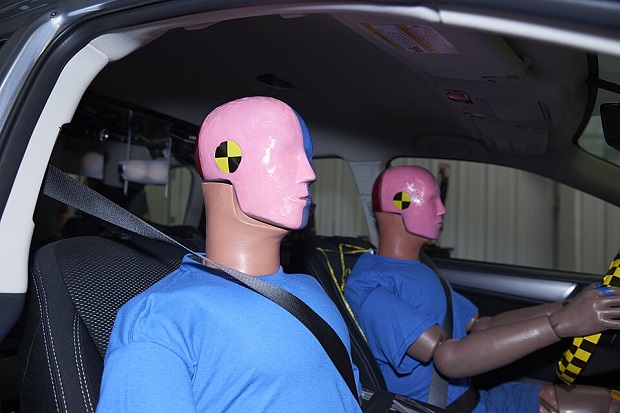
The EU replicated the same logic. The Euro New Car Assessment Programme (NCAP) tests crash safety on a male dummy. Women are 73% more likely to be seriously injured in head-on collisions compared with men. A proper female dummy has existed since 2023. Euro NCAP plans to use one by 2030. You or your daughter, sister or mother drives a car today tested for someone else's body.
Personal Protective Equipment tells the same story. During Covid, masks designed for male faces did not seal on women. Gowns dragged on floors. Only 30.5% of female healthcare workers always felt safe, against 53.3% of men. Women make up 75% of frontline healthcare staff. The people who kept you alive during the pandemic did it in equipment that did not fit.
The same logic runs through your food and water. EU pesticide limits calculate acceptable exposure on a 70-kilogram adult male. More than 50 pesticide ingredients are classified as endocrine disruptors, meaning they interfere directly with the hormonal system. A female body, with its cyclic hormonal architecture, is more exposed to that interference. The EU added two of those compounds (out of 50+) to its drinking water monitoring list in January 2022. It is supposed to be safer for whom?
Now add climate change. The planet is warming and it is not warming equally. Women and minorities experience more severe negative effects from climate change due to their biological, reproductive and social roles. Extreme heat during pregnancy is linked to preterm birth, stillbirth and maternal death. Nobody designed climate policy around that.
Now add money. Only 5% of global health research funding goes to women's health. Within that, just 1% covers women-specific conditions outside cancer. Closing this gap would add one trillion dollars to the global economy annually by 2040. This is an economic argument to do better.
Now add AI. An algorithm learns from the past. In healthcare, women and minorities were excluded from clinical trials for decades. The result is not just missing data. Medical records actively code women and minorities' symptoms as "atypical" because they deviate from male-defined models of disease. The AI learns that framing. It then reproduces it at scale, on every patient, in every hospital using that system. The bias was not programmed in deliberately, it was inherited. This is worse, because nobody had to make a decision to discriminate. The discrimination arrived automatically, laundered by mathematics and called objective. If the people building these systems stay as homogeneous as they are today, nothing will be corrected. It will compound.
The biases are not malicious. They are architectural.
Architecture, unlike intention, has a cost. Somebody always pays it.
The fix is not complicated. It does not require new science. It requires different people in the rooms where standards get written, where budgets get approved, where safety thresholds get set. When the reference patient changes, the standard changes. When the standard changes, the cost disappears. This is why the fight for gender equality and equity is not finished.
Dr Audrey-Flore Ngomsik, Trianon Scientific Communication
Photos: (main image) ©Belgium.be; Dr Audrey-Flore Ngomsik; Crash dummy ©Wikimedia Commons