
- Daily & Weekly newsletters
- Buy & download The Bulletin
- Comment on our articles
Related articles
Recent




Popular



Record year for Belgian food banks
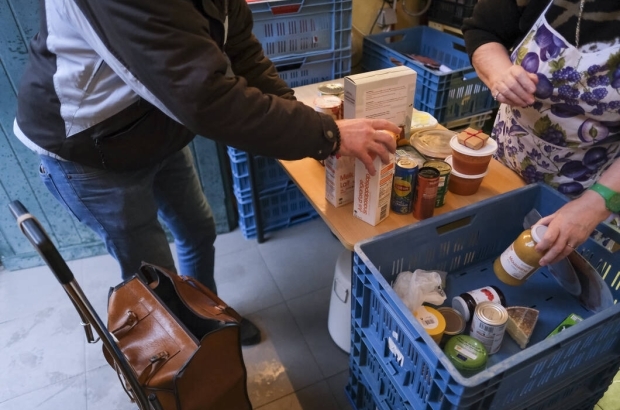
A record 204,791 people sought regular food aid in Belgium in 2025 - twice as many as 20 years ago - according to the annual report from the Belgian Federation of Food Banks.
The report states that given the increase in poverty, food bank services have become essential to the survival of the poorest members of society.
The Belgian Federation of Food Banks consists of 688 local associations throughout the country, with 10 associations having had to cease their activities due to a lack of resources, infrastructure or volunteers.
Managing director Marc Mertens emphasised that the 2025 report was, however, generally positive.
“A total of 27,985 tonnes of food were distributed, which is an 8% increase on last year,” Mertens said. “This equates to 5.2 meal equivalents per person per week.”
Last year, a total of 56 million meals were distributed, worth €106 million.
The new record can be explained in particular by an increased contribution from the distribution sector, a larger volume of fruit and vegetables from wholesalers, and unprecedented support from neighbouring French and Dutch food banks.
The work of Waste Warriors, an association that transforms fruit and vegetable waste into food with a longer shelf life, also had a major impact.
But while 2025 saw food banks helping in record numbers, the federation is worried that 2026 could prove catastrophic for beneficiaries as the sector is squeezed.
“The number of people dependent on food aid will skyrocket due to new policy measures concerning unemployment,” Mertens said.
“The number of unemployed people who will lose their benefits and have to turn to the CPAS [public welfare centres] will only increase. They’ll have even less money to feed themselves.”
Even without this drastic change in unemployment benefits, food banks have seen their number of beneficiaries triple in 30 years - 69,938 beneficiaries in 1995 and 204,791 beneficiaries in 2025, according to the latest report.
Along with the expected increase in users over the next two years, federal aid to food banks will also be significantly reduced. The federal government will release €10 million less next year for food banks, which represents about 5,000 tonnes of food, or 20% of what food banks distribute.
Currently, almost 40% of the food banks’ supplies in Belgium come from the federal government.
In the coming years, food banks will have to feed more people with fewer resources and will therefore need to implement new strategies.
“We will have to reduce our dependence on public funding, which has become too uncertain in times of budgetary constraints,” said Piet Vanthemsche, president of the Belgian Federation of Food Banks.
“The policy is becoming less generous and the gaps in the net will become larger.”
These developments could lead to a decline to an average of three to four meal equivalents per person per week.
Among the federation's initiatives is the creation of a fund dedicated to the purchase of food, which is also supplied by non-food companies. The federation itself contributes €1 million to this fund through private donations.
To further encourage donations, the federation is counting on VAT relaxations that went into force at the end of last year. Before these changes, it was sometimes more advantageous to destroy surplus food than to donate it.
Without the food banks, 16,321 tonnes of food would have been thrown away last year, or more than half (58%) of the food collected, according to the federation's report.
The federation hopes that excise duties on non-alcoholic beverages will also see VAT adjustments that will encourage suppliers to donate instead of destroy. Fevia, the Belgian food industry federation, is also advocating for a change.