
- Daily & Weekly newsletters
- Buy & download The Bulletin
- Comment on our articles
Related articles
Recent




Popular





Sharp increase in Brussels bankruptcies in 2025
Bankruptcies in Brussels increased by 12% in 2025 compared to 2024 figures, according to new figures from trade data company Graydon Creditsafe Belgium.
The increase is faster than elsewhere in the country. Belgium as a whole recorded 11,967 bankruptcies resulting in 26,778 job losses, with reasons including high energy prices and inflation. The bankruptcy level nationwide was 5.9% more than in 2024, and the worst year since 2013.
The business courts of the Brussels region declared companies bankrupt 2,175 times last year - 12% more than in 2024.
This means that bankruptcies are rising faster than in Flanders (+5.7%), while the number of firms going out of business fell by 4.03% in Wallonia.
Considerably more real estate agencies (+73%) and consultancy firms had to file for bankruptcy, Graydon Creditsafe Belgium said.
In traditionally sensitive sectors such as hospitality, retail and transport, the number of bankruptcies went up by 12 to 14%. The increase in construction closures was 2% but as this figure included several large construction companies, more than 500 jobs were lost.
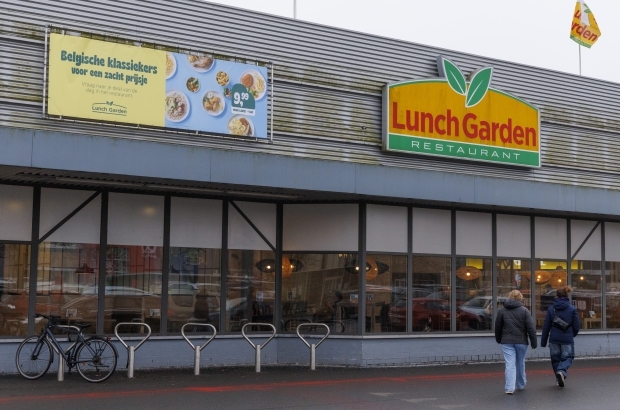
The biggest Brussels bankruptcy last year was that of the Lunch Garden restaurant chain, headquartered in Evere. As a result, 740 jobs were lost. Some restaurants, such as the branch at Carrefour hypermarket in Berchem-Sainte-Agathe, made a new start under a new name.
The second largest casualty was the construction wholesaler BMC Benelux (Youbuild) in Berchem-Sainte-Agathe, causing 176 job losses, with Air Belgium another big loss.
The collapse of the once popular jewellery chain for teenagers, Claire’s, which filed for bankruptcy in August 2025 and had three stores in the capital, and courier company Colispro (Forest) also led to significant job losses.
Officially, some 5,449 jobs were directly at risk due to the bankruptcy of a company in the Brussels region, representing a 29% increase. This is also the highest number of jobs lost in the past decade, Bruzz reports.
Graydon Creditsafe Belgium research and development director Eric Van den Broele noted in particular the increase in small businesses going out of business, a phenomenon marked by the inability of companies to survive life after Covid and high energy prices.
The construction sector has seen the sharpest rise in bankruptcies. For the second year in a row, this sector has broken records: 2,710 bankruptcies were declared, 8.1% more than in 2024. This phenomenon is particularly noticeable in Flanders and Brussels.
“It’s clear that prices are the key factor here. It’s the rise in material prices and also the rise in wages,” said Van den Broele.
“It’s also the fact that more and more people who are building are no longer able to pay their contractors due to the price increases.”
Nevertheless, job losses in this field are slowing down. This illustrates Graydon Creditsafe’s observation that it is generally smaller companies that are going bankrupt, RTBF notes.
Another sector affected is transport and logistics, affected particularly by increased salaries, high petrol prices and competition from Eastern Europe. In 2025, 801 companies went bankrupt, 15% more than in 2024, meaning that 3,252 jobs were lost.
The third most affected sector is business services, Van den Broele added: “Think of accountants and translators, where artificial intelligence is playing an increasingly important role and is starting to influence these figures.”
In this service sector too, the figures are bleaker than ever, according to Graydon Creditsafe Belgium. Last year, 1,755 companies went bankrupt in this domain, with almost 3,000 jobs lost.
Finally, net business growth, or the difference between firm closures and the creation of new businesses, was at its lowest level for 10 years at 6.37%. An increasing number of start-ups are also deciding to go for sole ownerships.
In its summary for the year, Graydon Creditsafe Belgium concludes that, “2025 shows Belgian entrepreneurship that is holding its own but increasingly opting for caution and survival over growth”.
Van den Broele does not expect the outlook to improve in 2026, “as there are already many cases before the courts”.
Meanwhile, Sébastien Hamende, director of employment agency Hub.brussels’ Revival programme, which offers entrepreneurs who have gone bankrupt or ceased trading “support from volunteer professionals to help them bounce back, both personally and professionally”, said that bankruptcies were not just a question of finance.
There is an emotional cost too, he told RTBF. Many businesses provided a social life, leaving employees faced with “total emptiness” when they no longer had work to go to.