
- Daily & Weekly newsletters
- Buy & download The Bulletin
- Comment on our articles
Related articles
Recent

Popular


Many happy returns: SNCB turns 100 years old
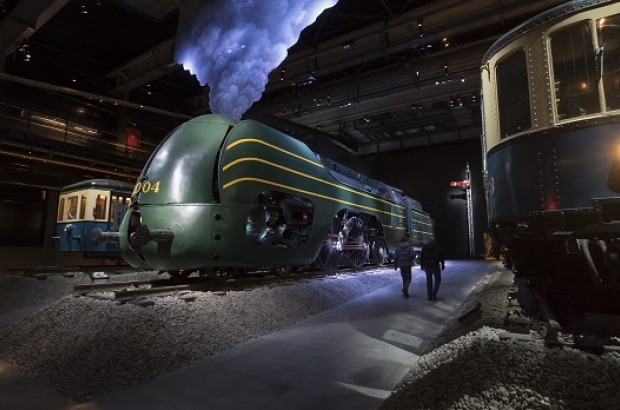
Belgium’s national railway operator SNCB is celebrating its 100th anniversary this month with a programme of music and cultural activities throughout the year.
The SNCB was established by the Act of 23 July 1926 and remains the sole operator of passenger trains in Belgium to this day - although Belgian railways are due to be opened up to competition from 2032.
Prior to 1926, the Belgian State Railways was the country's rail operator. Paralysed by a cumbersome structure, political interference, corruption and massive financial deficits, it was bleeding money and therefore considered incompatible with the high national debt and costly reconstruction of the country following the first world war.

“Following the widespread destruction of the war, half of the network and rolling stock had to be replaced and rebuilt,” said Thierry Denuit, director of Train World and the SNCB’s historical heritage.
“There was a significant need for investment.”
The complete history of Belgian rail begins back in 1834, when Belgium’s government facilitated the first train journey on the European mainland.
This was in part thanks to King Leopold I, who met British civil engineer and mechanical engineer George Stephenson - considered the "father of railways" - and recognised the potential of the steam train concept.

The railway became the driving force behind the Belgian economy when, gaining independence from the Netherlands, Belgium could no longer use the waterways to link the port of Antwerp with heavy industry in Germany.
“A system of railways shall be established in the kingdom, with Mechelen as its centre, extending eastwards towards the borders of Prussia via Leuven, Liège and Verviers; northwards to Antwerp; westwards to Ostend via Dendermonde, Ghent and Bruges; and southwards to Brussels and the French border via Hainaut,” reads Article 1 of the Act establishing the Belgian State Railways.
In 1926, SNCB became a separate legal entity with its own capital and its own funding. The government retains control over the company’s operations through a system of preference shares.
During the economic crisis of the 1930s, SNCB faced difficulties due to a decline in freight and passenger numbers. Nevertheless, it managed to complete the Brussels-Ghent express line, enabling express trains to connect Brussels with Ostend in less than an hour - faster than today - thanks to the Atlantic 12 steam locomotive, capable of speeds of up to 165 km/h.
The electrification of the Brussels-Antwerp line was also a feat, and by the end of the 1930s, the railway company was turning a profit.

Steam locomotives continued to operate even after the second world war, but they gradually gave way to diesel traction and electric trains. Steam locomotives were not permitted to travel under their own power on the Brussels North-South tunnel link, which was officially inaugurated in 1952.
The first electric locomotives appeared in the 1930s, but only became widespread from the 1950s onwards. Initially, electric locomotives were mainly used for freight transport on the Antwerp-Charleroi line. A few years later, passenger services followed on the major routes, with the Ostend–Brussels-Liège mainline considered the priority.
Also in the 1930s, SNCB introduced railcars, smaller trainsets powered by a diesel engine. These mainly operated on the smaller local railway lines. Later, diesel locomotives were added to the fleet, which were used on non-electrified lines. This was cheaper than electric operation, as electrification proved to be a costly undertaking.
Nevertheless, more and more railway lines were electrified over the decades - from 44km in 1946 to 956km in 1962. Today, more than 90% of the 3,062km-long rail network is electrified.
Diesel trains now only run on a few regional lines, mainly in East Flanders where electrification is not considered cost-effective. By 2030, SNCB plans to replace them with battery-powered trains.
In 1984, SNCB found itself in a poor financial position and then federal transport minister Herman De Croo (Open VLD) introduced the IC/IR plan, which overhauled much of the existing system.

From then on, IC (Intercity) trains would run between the major cities, departing punctually every hour. IR (Interregio) trains would also stop in smaller towns, while L trains would replace the local omnibus services.
At the same time, a number of unprofitable railway lines were closed down and more than 200 stations were shut. In 2014, the IR designation was phased out. All IR services are now also referred to as IC.
After several lean decades, the SNCB received additional investment funds in the 1990s, which were desperately needed to modernise the rail network. New, comfortable carriages and multiple units were introduced, and more high-speed lines were built.
In 2005, SNCB was split into infrastructure manager Infrabel and operator SNCB in order to comply with the European requirement for the liberalisation of the rail market, which is due to be fully implemented by 2032.
This resulted in a single infrastructure manager despite the intention to allow different operators to compete with one another, sparking considerable controversy, with critics arguing that it was inefficient.
By 2032, SNCB will have lost its monopoly position and must become competitive. Transition measures have led to considerable social unrest and strikes. In particular, changes to pension plans and a gradual phasing out of permanent appointments have caused friction with trade unions and staff. At the end of 2024, SNCB employed 16,953 people.
After travel took a hit during the pandemic, passenger numbers have been steadily rising year on year. SNCB recorded 245 million journeys in 2024, close to the 253 million pre-pandemic figure.
Of those 245 million journeys, more than 85 million were made on a commuter season ticket - an exceptionally high figure driven by commuters who take the train to work in Brussels every day.
Railway enthusiasts can learn more about the history of trains in Belgium at SNCB’s museum Train World, located in the art-nouveau station at Schaerbeek in Brussels.
Photos: Train World; SNCB archive