
- Daily & Weekly newsletters
- Buy & download The Bulletin
- Comment on our articles
January carnivals in Flanders
If you thought Flanders was dead between New Year and Carnival in February, think again. East Flanders is home to two unique early carnivals, in Zottegem and Ronse. Carnival princes and kings lead colourful parades of floats every first Saturday after New Year.
Known as Driekoningencarnaval at its start in 1956, Zottegem’s carnival festivities originate from the celebration of Driekoningen (Three Kings’ Day, or Epiphany) on January 6. According to Christian belief, this is the day that the Magi brought Jesus their gifts.
There are no groups of people dressed up as kings from the east in the contemporary parade any more, but a carnival prince is elected each year as head of the festivities. On January 3, the prince receives a symbolic key to the city to kick off the party weekend.
The parade of about 35 groups with their colourful floats moves through the town centre as part of Saturday evening’s programme. Like any good carnival, many of the floats make fun of politics or parody world-famous carnivals such as the one in Rio de Janeiro. Later that evening, a jury chooses the winners in categories like “best costumes”, and the party continues on the central square.
On Sunday, youngsters seize power. A jury elects a youth prince and princess after a talent competition, and all children can dress up to parade on floats through the centre in the afternoon. Then the elderly take centre stage, with an afternoon of dancing and other activities, led by the senior emperor and empress. The party, then, is over in the centre of Zottegem – but not in outlying districts such as Erwetegem and Sint-Maria-Oudenhove, where parades are organised the following weekend. The city key is handed back to the mayor on the next Monday.
Bommelsfeesten in Ronse
The Bommelsfeesten started in the early 1950s when local carillon player and composer Ephrem Delmotte assembled the merrymakers on Zotte Maandag, or Crazy Monday – the last day of the winter holidays – in one parade. The costumed partiers were called bonmohs in the local dialect, which later became bommels. (Very loosely translated as vrolijke vrienden, or jolly good fellows.)
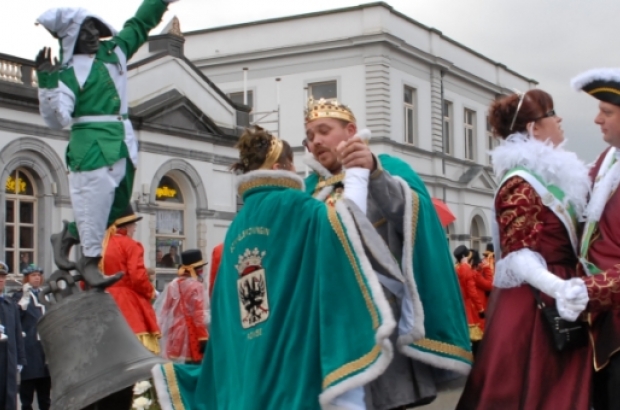
Early on 5 January, the elected carnival king and queen will head a small group of dignitaries through the town and call on the inhabitants to participate in the day’s festivities. After leaving from the Zotte Muur, a wall covered in caricatures, they lay flowers at the statue of the Ronsiese Zot or Ronse’s Fool – the symbol of the Bommelsfeesten (pictured). When the group arrives at the central square, the mayor hands them the key of the city, just as he does in Zottegem.
In the evening, a parade of floats, musicians and majorettes amuses the crowd, followed by stage performances on the central square. Whoever catches the caramel during the karamellenworp (caramel toss) receives a gilded sculpture called the Gouden Bommel. The night is further brightened up with fireworks.
As in Zottegem, the Sunday is full of activities for children (bonmohkies in Ronse’s dialect) and special entertainment is provided for older citizens on Monday. On Monday evening, the royal carnival couple return the city key to the mayor and together they bring the festive weekend to an end by burning a straw dummy dressed up as a bommel.