- Daily & Weekly newsletters
- Buy & download The Bulletin
- Comment on our articles
Hot metal: Steel giant invests €15m in Charleroi plant
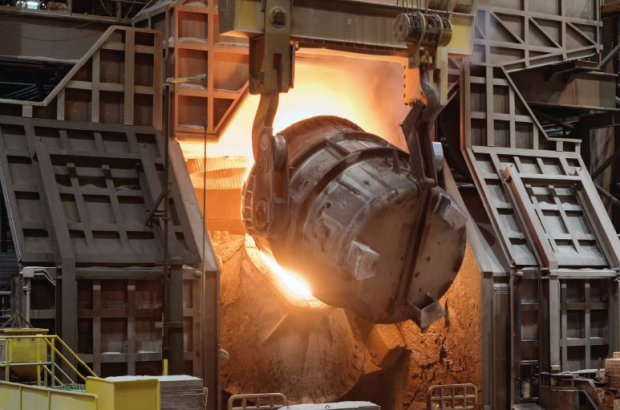
The European steel industry is not in a great way. Last year, the EU became a net importer of steel for the first time in seven years, despite a strong tradition of manufacturing across the bloc. And in recent years, 40 000 jobs across the EU have been lost in the sector as the financial crisis took its toll.
While the EU is working to tackle the lack of demand for European steel with action plans and funding, the sector is struggling to compete with Asian companies, particularly those in China, which is responsible for almost half of the global crude steel production. Foreign supply remains a critical issue for the sector, according to forecasts this year by the European Steel Association.
And yet in Châtelet, 10km east of Charleroi, the engines aren’t coming to a standstill but whirring even faster as the Walloon site bucks the gloomy European trend.
Earlier this year, Aperam – the second largest stainless steel manufacturer in Europe – announced that it would be pouring €15 million into its plant in Wallonia, the only site that boasts a hot rolling steel mill. The company also owns operations in France and Brazil.
The investment is proof of the company’s confidence in the “innovative and forward-looking” site, an Aperam spokesperson says. Not bad for a site that was established only six years ago.
This financial boost is part of a larger investment package worth €57 million. The most recent investment, announced last month, will go towards two new giant rolling steel motors, each 140 tonnes in weight. The aim is to make the site more efficient – the new technology will turn at 100 revolutions per minute, reducing the steel to sheets of just 10 millimetres in thickness.
Efficiency is key in a sector that sees much of its expenses go towards energy costs. A study by economic consultancy Ecorys estimates that energy represents 40% of steelmakers’ total operational costs.
Aperam are not speculating publicly about how much steel the plant aims to produce following its modernisation. Until now, the site has been manufacturing 2.8 million tonnes of steel per year. The steel, after being sent to a transformation site, is used for everything from cars to building materials – even the kitchen sink.
The company is also planning to roll out a monitoring system to verify the plant’s environmental impact. This is part of a growing trend by European steelmakers who, despite the sector’s poor environmental past record, are beginning to take sustainability into account.
This has been reiterated by the company’s CEO, Timoteo di Maulo, who says Aperam’s identity as a “socially responsible company” is at the heart of its commitment to sustainability.
Aperam, which employs 2,200 across its two sites in Belgium – the other is in Genk – has said it will be hiring 60 new staff members as a result of the investment.
That’s no small thing in an area that has one of the highest unemployment rates in the country and which recently saw the high-profile closure of the Caterpillar factory, just 15km from Châtelet.
“It’s good news for the region and allows us to remain a major player in terms of jobs,” Aperam spokesperson Guillaume Foccroulle said.