
- Daily & Weekly newsletters
- Buy & download The Bulletin
- Comment on our articles
Related articles
Recent



Popular


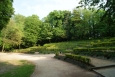
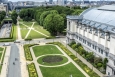
Flower power: Meise Botanic Garden opens new native flora garden to reinforce Belgium’s plant diversity

Belgium’s horticultural treasure, the Meise Botanic Garden, has taken a pioneering step in safeguarding the country’s biodiversity by opening a new Native Flora Garden.
The landscaped space with some 600 indigenous plants focuses on 175 endangered species that are red flagged in Flanders and Wallonia.

It was officially inaugurated by Flemish minister-president Matthias Diependaele (pictured above left) on Thursday in a ceremony attended by the small but committed team that run the 92-hectare domain, as well as the large army of volunteers that assist them.
“The Meise Botanic Garden is a place where science, innovation, and nature reinforce each other,” he said of the the Flemish-owned site that attracted more than 250,000 visitors in 2025.
Located on the outskirts of Brussels in Flemish Brabant, in the grounds of Bouchout Castle, the garden is a popular tourist attraction as well as an international reference point for horticulture.

The new facility is the latest project in the botanical garden’s masterplan to create a living laboratory for research and nature conservation, while also providing an immersive visitor experience.
It follows the opening two years ago of the garden’s vast greenhouse complex, the Green Ark. Dedicated to growing and protecting endangered plant species from around the world, it possesses a seed bank that serves as a genetic resource for selecting cultivated plants resistant to diseases and climate change.
The new plant garden, complete with natural ponds, is positioned conveniently alongside these resources, while also stretching out to the rooftop of the renovated Pachthof visitor area. This collection of red-bricked buildings houses a restaurant, courtyard terrace and playground area.

Despite being a small country, Belgium boasts a rich and diverse habitat that includes rare ecosystems such as blue grasslands, wet heathland and zinc flora.
Visitors can discover the 22 different landscapes that inspired the garden, from salt marshes and Ardennes forests, to coastline dunes, heaths and peat bogs. Around one fifth of all plant species found in the wild in Belgium are grown here, with endangered species identified by special red labels.

Although 75% of the species on the Flemish Red List have now been preserved, efforts are underway in collaboration with nature agency Natagora to achieve similar results by 2030 for the twice as long Walloon Red List.
The new native plant facility plays an important role in nature restoration projects by reintroducing extinct plant species into local habitat.
For Koen Es, director of public services, it also completes the botanic garden’s existing displays: a plant palace filled with diverse flora from around the world and culinary garden where vegetables and herbs are grown.
And conserving wild plants is key to maintaining biodiversity, he says. “Flowers are an important source for pollinating insects. Certain insects also have an exclusive relationship with plants; it’s very complex and if you take out one element, the whole chain is messed up.”

The major threat to local plant species is urbanisation, he explains. “There is very little space left for nature which is why we need to conserve it.” Intensive farming, pollution, fertilisers, weed killers all play their part in menacing plant variety, as well as climate change. “Habitats in the Ardennes are becoming dryer.” Restrictions on fertiliser are making the situation better, but it takes time for species to recover and aquatic plants in particular are often lost for ever, adds Els.
He also decries the general public’s decreasing nature and plant familiarity. “There is so much knowledge erosion; so few people know the species of their own country. Year after year, decade after decade, there is a decrease in knowledge in biology students and it is really important to level it.”
Concludes Els: “If we could create a little bit of awareness when tourists come to the garden then we are really happy. And of course that they had a nice time and enjoyed good food.”

Jutta Kleber is the garden’s education officer, running workshops for six to 18-year-olds from local and international schools to give them hands-on knowledge of plants; their geography and adaptation.
“Obviously we work a lot on biodiversity because this is the main mission of our botanical garden: naming it, protecting it and raising awareness of the problem of the loss of biodiversity,” she says. “If you talk about extinct species, people think of animals. We explain that without plants you can forget about the biodiversity of animals.”
Kleber notes that adolescents are frequently aware of the threat to the environment by climate change. “We get a lot of enthusiasm from young people, especially 15 and 16-years olds, who applaud you when you explain our work.”
The new garden will bring Belgian biodiversity closer to them, she says. “They might recognise the plants and the message is that they can contribute to this diversity. They might not be gardeners today, but they could be gardeners in the future.”
Photos: ©Meise Botanic Garden; The Bulletin