
- Daily & Weekly newsletters
- Buy & download The Bulletin
- Comment on our articles
Related articles
Recent


Popular


First Belgian repatriation flights leave Middle East
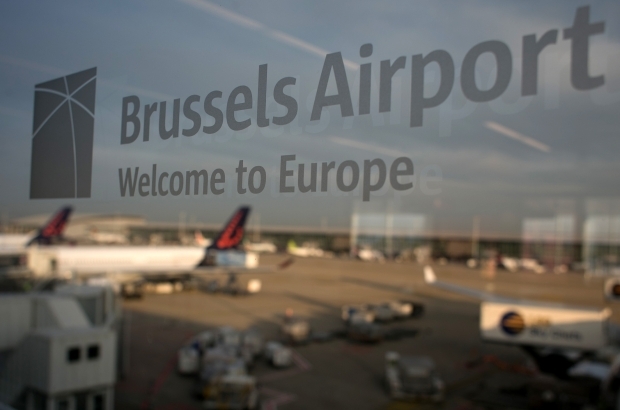
The first Belgian repatriation flight from the Middle East, carrying 234 passengers, landed at Brussels Airport over the weekend after departing from Oman on Saturday evening, the foreign ministry has announced.
Among the passengers were 195 Belgians, 22 Spaniards, 13 French, two Luxembourgers and two Swedes.
“We are very happy that they can return home and see their loved ones,” said Pierre Steverlynck, spokesperson for the foreign affairs ministry.
“It wasn't easy. The foreign affairs ministry, together with our diplomats and embassies on the ground, worked hard for a week to bring back the Belgians who wanted to return.”
Passengers said they were satisfied with the work of the government service.
“They did a great job,” said Pascal, who was repatriated from Dubai. “They arranged everything in just a few days. We were really reassured. I am grateful to them for their professionalisme.”
According to the Belgians, the situation on the ground was complex. “We saw rockets, that made us very anxious,” said passenger Vanessa.
Pascal said that “the famous defence shield worked very well, but we were still very scared.”
Belgium also planned military flights with two A400Ms from the United Arab Emirates. These flights transported about 100 people per flight from Dubai to Hurghada on Sunday, to then be picked up by an MRTT which then took them to Brussels Airport in the early hours of Monday.
A flight was also chartered by Cyprus Airways. That aircraft transported approximately 180 people from Dubai to Brussels on Sunday evening after a technical stopover in Cyprus.
Over the same weekend in Brussels, a commemoration of Ali Khamenei’s "unjust martyrdom" that was to take place on Saturday evening near the Delacroix metro station was banned by Molenbeek mayor Catherine Moureaux (PS).
Khamenei was a Shia cleric who served as the second supreme leader in Iran until his assassination in the recent attacks from Israel and the United States.
La Dernière Heure reported that the owners of the event hall where the commemoration was planned are Iranian and that the location was said to be a meeting place well known among Shiites.
Figures close to the Iranian regime and the Iranian embassy in Belgium were expected to attend.
Moureaux banned the memorial service late on Friday evening, adding that the police would also act against any possible counter-demonstrations.
Ganshoren MR councillor Melissa Amirkhizy, who has Iranian roots, said in an interview with Bruzz that opponents of the regime in Belgium had been planning such a counter-demonstration should the memorial be allowed to take place.
“I have been working all day today to have this event banned,” said Amirkhizy. “And if it hadn't been banned, hundreds of us would have gone there.”
Official permission had also been requested for a counter-demonstration, but the Molenbeek municipality decided not to grant it now that the memorial itself was banned.
Amirkhizy expressed support for the United States’ and Israel’s attacks on Iran and claimed there were "radical profiles" behind the banned memorial, citing European designation of the Iranian Revolutionary Guard (IRG) as a terrorist organisation as evidence.
“The IRG has been placed on the European Union’s list of terrorist organisations,” said Amirkhizy.
“The IRG is under the authority of the Ayatollah. Khamenei was a terrorist. Who can commemorate someone like that?”
The Iranian-Belgian councillor said she has had no contact with her family in the capital Tehran and Anzali, a city on the Caspian Sea, in recent days. Amirkhizy’s mother and brother live with her in Belgium, but the rest of her family is in Iran.
“What is happening now is exactly what many Iranians have been asking for for years,” Amirkhizy said.
“The population has long been asking for help in its struggle to overthrow the evil regime. This war is the only way to bring about change.”
While previous American intervention in the Middle East resulted in a decades-long presence or even outright occupation, Amirkhizy said that “sooner or later, the population will be able to take matters into its own hands, I am sure of that”.
For the time being, the impact of the war in the Middle East remains small in Brussels. Brussels minister-president Boris Dilliès (MR) convened a regional security council meeting last week, to which the 19 mayors and the Brussels police chiefs, among others, were invited. The main purpose was to outline the possible threat to Brussels.
“The Iranian regime is a base for terrorism and its reactions are often unpredictable,” Dilliès said after the meeting.
“We must be able to act quickly, in a coordinated and effective manner, if necessary.”