
- Daily & Weekly newsletters
- Buy & download The Bulletin
- Comment on our articles
Related articles
Recent




Popular


Exceptional marble head of Alexander the Great joins Mariemont Museum’s prestigious collections
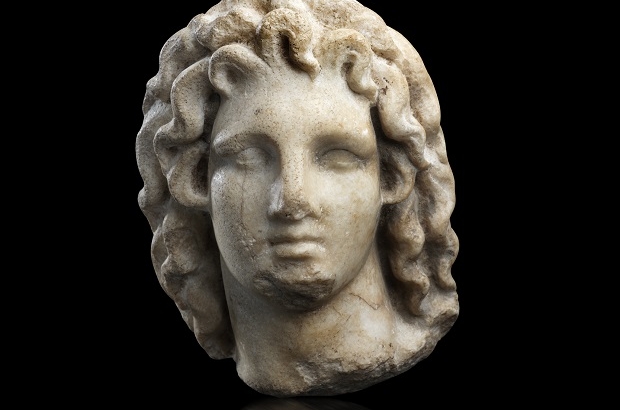
An authentic sculpture of Alexander the Great has joined the collections of the Royal Domain and Museum of Mariemont following a crowdfunding campaign by its Royal Circle of Friends.
The ancient marble head, dating from the 2nd century BC, is one of Mariemont’s most important acquisitions in recent decades, “both for the quality of the sculpture and the prestige of the universal figure it represents,” the Hainaut museum said in a statement.
It was acquired thanks to an exceptional donation from the Royal Circle of Friends of Mariemont, which was founded in 1934.
“This donation marks a significant milestone in the museum's history and testifies to the vitality of heritage patronage, driven by an association with over 1,300 members, which is now among the largest in Belgium,” added the museum.
Well-documented provenance

The marble head originates from a private collection in the UK that was amassed in Egypt between 1920 and 1970. It was one of several comparable portraits unearthed mainly in Alexandria, including one now owned by the British Museum.
The piece is linked to Greek antiquity and in particular the Ptolemaic period, when Alexander was the object of a dynastic cult and representations of him were widely disseminated. He was identifiable thanks to characteristic features, notably his lion's mane of locks rising above his forehead.
This latest acquisition complements an already remarkable Hellenistic collection of effigies of Ptolemaic rulers who claimed descent from the famous Macedonian. It now occupies a prominent place in the visitor experience, alongside major works like colossal bust of Cleopatra from Alexandria, a treasure of the Wallonia-Brussels Federation.
Exceptional heritage site
The museum near La Louvière houses classical antiquity treasures within an expansive English landscaped park – one of the finest in Belgium – that dates from the 16th century.

The Mariemont domain was originally founded as a hunting lodge by Mary of Hungary, the sister of Emperor Charles V. It was bequeathed to the Belgian state after the death in 1917 of its final owner, industrialist Raoul Warocqué, on condition that it opened for free to the public.
An illustrious figure in the region with a passion for art, he collected masterpieces including rare frescoes from Pompeii, Greek and Roman statues, as well as fine Chinese and Japanese works and local collections. They survived a fire that destroyed the family chateau in 1960.
A new museum opened in the 1970s to house the collections and stage temporary exhibitions. Designed by Belgian architect Roger Bastin, the brutalist concrete structure incorporates the one wing of the chateau that survived the blaze.
Photos: Buste d’Alexandre le Grand ©DMRM (Don du Cercle royal des Amis de Mariemont ASBL); ©Le château de Mariemont by J-B Simons, 1773