
- Daily & Weekly newsletters
- Buy & download The Bulletin
- Comment on our articles
Related articles
Recent




Popular
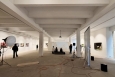



Charleroi celebrates Val Saint Lambert bicentenary with dazzling display of Art Deco and modernist glassware

Reflecting the timeless beauty of cut glass, Art Deco and Modernism at Val Saint Lambert (1925-1939) shines a light on one of the Belgian glass and crystal manufacturer’s richest aesthetic periods.
It was during these interwar years that the internationally-renowned Liège company underwent an artistic and technical revolution. Not only did the elegant geometric lines of the Art Deco movement herald a new exciting age of modernism, industrialisation transformed production at the powerhouse company.

This unprecedented exhibition at Charleroi Palais des Beaux-Arts is part of its large-scale bicentennial celebrations, which include exhibitions at its Seraing site and at the Design Museum Brussels.
Comprising 160 glass and crystal works and archive documents, the show traces the history of the factory established in a Cistercian abbey in 1826, showcases the illustrious designers behind its success and highlights the international salons where Val Saint Lambert’s finest pieces were displayed.
The show is staged by Charleroi’s Glass Museum, the regional institution dedicated to the rich history of glass making, located at Bois de Cazier in nearby Marcinelle. “The crystal works are part of family history and the collective unconscious,” observes museum curator Catherine Thomas.

Divided into four themed sections, the opening displays of black-and-white photos immerse visitors in the early days of Val Saint Lambert and its founding by two French glass makers. As it quickly flourished, the site became a model workers’ village that contained a school, hospital and stores as well as accommodation for employees. Young boys were engaged as apprentice glass makers and boarded at the factory.
At the pinnacle of its production, just before the outbreak of World War One, a 5,000-strong workforce made some 125,000 crystal objects a day.
In the display cabinets that follow, dazzling vases and decorative pieces reveal the evolution of Art Deco in glass and crystal. Many of the works originate from private collections that are rarely on public view. The sinuous curves of Art Nouveau were replaced by sleek and intricate patterns often centred on floral motifs and geometric shapes as glassmakers perfected advanced cutting techniques and followed developing trends in their choice of colours. A video installation usefully illustrates the painstaking process of making crystal works.

A litany of talented designers are spotlighted, including Modeste Denoël, Joseph Simon, Charles Graffart, René Delvenne and Félix Mattagne. It was under award-winning Simon’s design leadership that the company underwent a true artistic renaissance by avidly pursuing Art Deco and avant-garde movements.
The succession of hand-crafted creations are complemented by prints showing Val Saint Lambert’s participation in a host of international salons, including the 1925 Paris fair that launched the Art Deco movement. The company won a grand prize at the salon, which was awarded by a jury chaired by French glass master René Lalique.
Alongside the exquisite crystal that forged the company’s reputation worldwide, the exhibition deliberately chooses to include examples of the tableware that graced many a home in Belgium. These more utilitarian pieces include affordable lines like the semi-crystal Luxval, which remained stylish and representative of its age.

It also highlights the use of modernist styled glass in architecture, reflecting the importance in construction of new modernist styles and techniques. Science was another domain in which Val Saint Lambert was solicited to produce lines such as transparent chemical beakers.
A final section revels in the diversity of crystal during this period by presenting some of the company’s most emblematic examples from the interwar years. Their jewel-like colours and exuberant forms are an evocative reminder of this golden age of design and craftmanship.
To honour the neglected role of female labour during the industrial revolution, the French artist and former glassblower Sandrine Isambert was invited to create three complementary installations at the entrance to the museum, entitled Faire feu.

A 50m looped glass chain suspended from the vaulted ceiling represents the shackles that have encumbered women over centuries, and a nod to “le travail à la chaîne” or production-line work, she explains. Meanwhile, a collection of crystal works supplied by Val Saint Lambert mounted in a corner display feature photos of women working for the company at different eras in its long history. A large-scale black-and-white photo of women in the 19th century is embellished by glass lettering that draws attention to their unpaid labour.
Together, they play with the notion of transparency, shadow and invisible presence to create a pertinent dialogue with not only the tradition of glass, but all of the region’s industrial heritage.
Art Deco and Modernism at Val Saint Lambert (1925-1939)
Until 27 September
Musée des Beaux-Arts de Charleroi
Boulevard Mayence 67
Photos: (main image) ©Artur Monfrais - Amon Photo; Selection of vases ©Artur Monfrais - Amon Photo; Two crystal vases ©Guy Focant