
- Daily & Weekly newsletters
- Buy & download The Bulletin
- Comment on our articles
Related articles
Recent




Popular





Brussels aims to limit souvenir shops and cafes in city centre
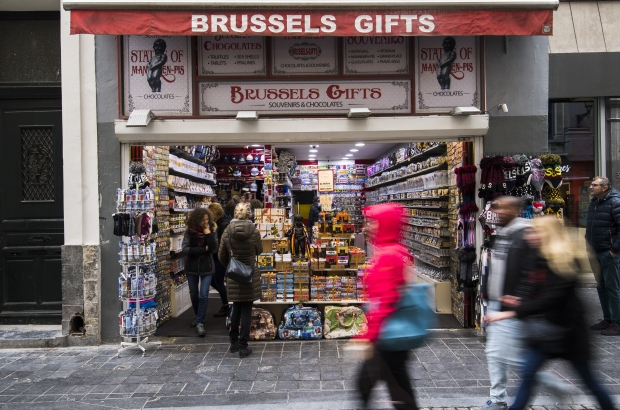
The City of Brussels wants stricter rules for businesses around the Grand-Place to create more diversity in the range of stores on offer, cracking down in particular on the proliferation of souvenir shops.
The number of souvenir shops will be limited to a maximum of 20, while there are currently about 40 in the area.
The mandatory reduction is to be the result of a phase-out policy. Existing licensed souvenir shops may remain open, but if they close, they must be replaced by something else.
The city has long recognised the problem with a lack of shop diversity around the Grand Place, but urban development alderwoman Anaïs Maes (Vooruit) said the council did not want to rush the process.
“It’s important to have a clear vision for the future of our historic centre,” Maes told Bruzz.
“In this way, we protect our heritage and ensure the liveability and attractiveness of this area.”
The number of cafes and restaurants will also be restricted under the new rules. In most streets, no more than one in three businesses will be permitted to be a catering establishment. An exception may be made for streets consisting exclusively of catering establishments.
As with souvenir shops, existing cafes and restaurants will not have to close, but the city may refuse a new licence application if there are already too many hospitality establishments in a particular street or area.
Brussels also wants to ensure that residential space is preserved amid the proliferation of tourist lodgings, now stipulating that a maximum of 20% of the total available floor space in the city centre's buildings may be used for hotels and other tourist accommodations.
Climate initiatives are also being incorporated into these plans, for example reducing the amount of concrete and other hard surfaces from an estimated 94% of the area to 75%.
Plans to strategically diversify the commercial offerings of the Grand-Place area have been in the works for some time. Night shops were restricted back in 2013, and a consultancy firm for a broader, long-term vision was appointed in 2021.
It then took almost five years before the plans could be put out for public consultation, as approval had to be obtained at various levels.
“This involves a legislative framework, so various intermediate steps must be approved by the regional authorities,” a spokesperson for Maes said.
The new plans are not yet final, as they are subject to a public consultation. The city will also organise meetings with the local residents affected from early November.