
- Daily & Weekly newsletters
- Buy & download The Bulletin
- Comment on our articles
Related articles
Recent


Popular



Act of Remembrance at Brussels Town Cemetery on Saturday honours war dead buried in Belgium

Belgium is historically known as the “battlefield of Europe” and a solemn and moving event this weekend highlights the shared sacrifices of the tens of thousands of war dead buried in Belgian soil.
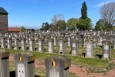
The annual Act of Remembrance will take place on June 20 at 11.30. It is an Allied commemoration held by the Royal British Legion (RBL) Brussels branch at the Commonwealth War Graves Commission (CWGC) cemetery in Evere.
The ceremony at the Brussels Town Cemetery serves as a joint tribute gathering military personnel, veterans, diplomatic representatives and others. It also features musical tributes from the Belgium Military Wives Choir.
While Armistice Day on 11 November is Belgium's principal national day of remembrance for all fallen soldiers, the 20 June Act of Remembrance holds unique significance for the British and Commonwealth expat and military communities in and around the capital.
Colonel Nick Thom, the new UK Attaché to Belgium and Luxembourg, whose French-Belgian grandfather served in the Belgian Army in WW2, will give a reflection at the service.
The 101-year-old Second World War veteran Count Henri d'Oultremeont, who lives in Brussels, is also expected to take part in the ceremony.
“It is an opportunity to honour all those who made the ultimate sacrifice for Belgium's freedom,” said RBL Brussels chair Dennis Abbott.
"More than 40 of the heroes laid to rest at Evere were still in their teens. While the majority of the casualties are British, 124 are Canadians, 21 are Polish and others came from Australia, the Netherlands, New Zealand, Greece and South Africa," he explained.

The main cemetery is the last resting place of many distinguished Belgian figures. They include four previous mayors of Brussels Jules Anspach, Adolphe Max (pictured above), Charles Buls and Charles de Brouckère, as well as François van Campenhout, composer of the Belgian national anthem, French artist Jacques-Louis David and Joséphine de Montholon, reputedly the daughter of Napoleon.
Some 641 of the 11,000 graves in the burial grounds are Commonwealth war graves and include 54 from WW1, 587 from WWII.

Among the notable graves are Major Bob Mélot (pictured above), a Belgian who served in the British Special Forces during WW2 with SAS legends David Stirling and Paddy Mayne. Mélot saw Brussels liberated in September 1944 but died at the age of 49 when his jeep crashed on 1 November.
Before the war, Mélot, described by Gavin Mortimer, author of Stirling's Men: The Inside History of the SAS in World War II as “one of the most intrepid men of the war”, was working as a cotton merchant in Alexandria.
Damien Lewis, a bestselling military historian and former TV war correspondent said of him: “A decorated First World War veteran, when he volunteered for Britain's armed services at war's outbreak, he was refused due to his age. Not to be put off, he joined the "ISLD" - the cover name for the Secret Intelligence Service in North Africa, and for ISLD ops in the desert was again decorated. That in turn led him to join the SAS, in whose service he gave the ultimate sacrifice. He was the bravest of the brave."

Another burial at Evere is Victoria Cross winner Flight Sergeant George Thompson (pictured above), of No 9 Squadron, Royal Air Force Volunteer Reserve. Originally from Perth and Kinross in Scotland, he was awarded the VC for saving his comrades in a burning Lancaster bomber.
After his aircraft had released its bombs on the Dortmund-Ems Canal in daylight on 1 January 1945, it was hit by a shell that caused a fire to break out. Despite the devastation and dense smoke, Thompson pulled an unconscious gunner out of the blazing turret.
Details of the dangerous rescue were recounted in his citation. “With his bare hands, he extinguished the gunner’s burning clothing. He himself sustained serious burns on his face, hands and legs. Flight Sergeant Thompson then noticed that the rear gun turret was also on fire. Despite his own severe injuries he moved painfully to the rear of the fuselage where he found the rear gunner with his clothing alight, overcome by flames and fumes.”
After again using his own burned hands to beat out flames on his comrade's unfirom, the Air Force man made the perilous journey back through the burning fuselage to report the fate of the crew to the captain. His own condition was so pitiful that his captain failed to recognise him. The Lancaster crash landed some 40 minutes later. Three weeks later Flight Sergeant Thompson died of his injuries. One of the gunners also did not survive.

The cemetery contains 54 Commonwealth casualties from WWI, including 49 brought back from Germany by the Canadian Corps in April 1919.
It is also the final resting place of members of the British Expeditionary Force, which helped defend Belgium following the German invasion in May 1940. In the ensuing years of the conflict, airmen were shot down or crashed in raids on strategic objectives in Belgium, or while returning from missions over Germany.
The Waterloo Memorial is also located in Brussels Town cemetery. Unveiled on 26 August 1890, it consists of a large sculpture of Britannia by Anglo-Belgian Jacques de Lelaing with a crypt below containing the remains of 17 men. They include Wellington’s aide-de-camp Lieutenant-Colonel Sir Alexander Gordon and Deputy Quarter-Master General Sir William Howe De Lancey, Captain John Blackman of the Coldstream Guards, killed at Hougoumont, and the only non-officer, Sergeant-Major Edward Cotton of the 7th Hussars, who survived the battle and became a well-known battlefield guide.
Photos: (main image) Brussels town cemetery ©City of Brussels; Adolphe Max grave ©City of Brussels; Major Bob Mélot; Flight Sergeant George Thompson; graves ©CWGC